
From the Pinhole · Lesson 12
How did the Kodak put photography in everyone's hands?
The text version of a lesson from Photography with Travis Zhang. All lessons →
In short: by splitting taking pictures from developing them. In June 1888 George Eastman launched the Kodak camera for 25 dollars, sold already loaded with a roll of film for 100 pictures. When the roll was used up, you mailed the whole camera back to Rochester, New York; the factory developed the film, made the prints, loaded a fresh roll and sent everything home for 10 dollars. The photographer only pulled a string, turned a key and pressed a button: no chemistry, no darkroom.
When did the Kodak appear, and how did it work?
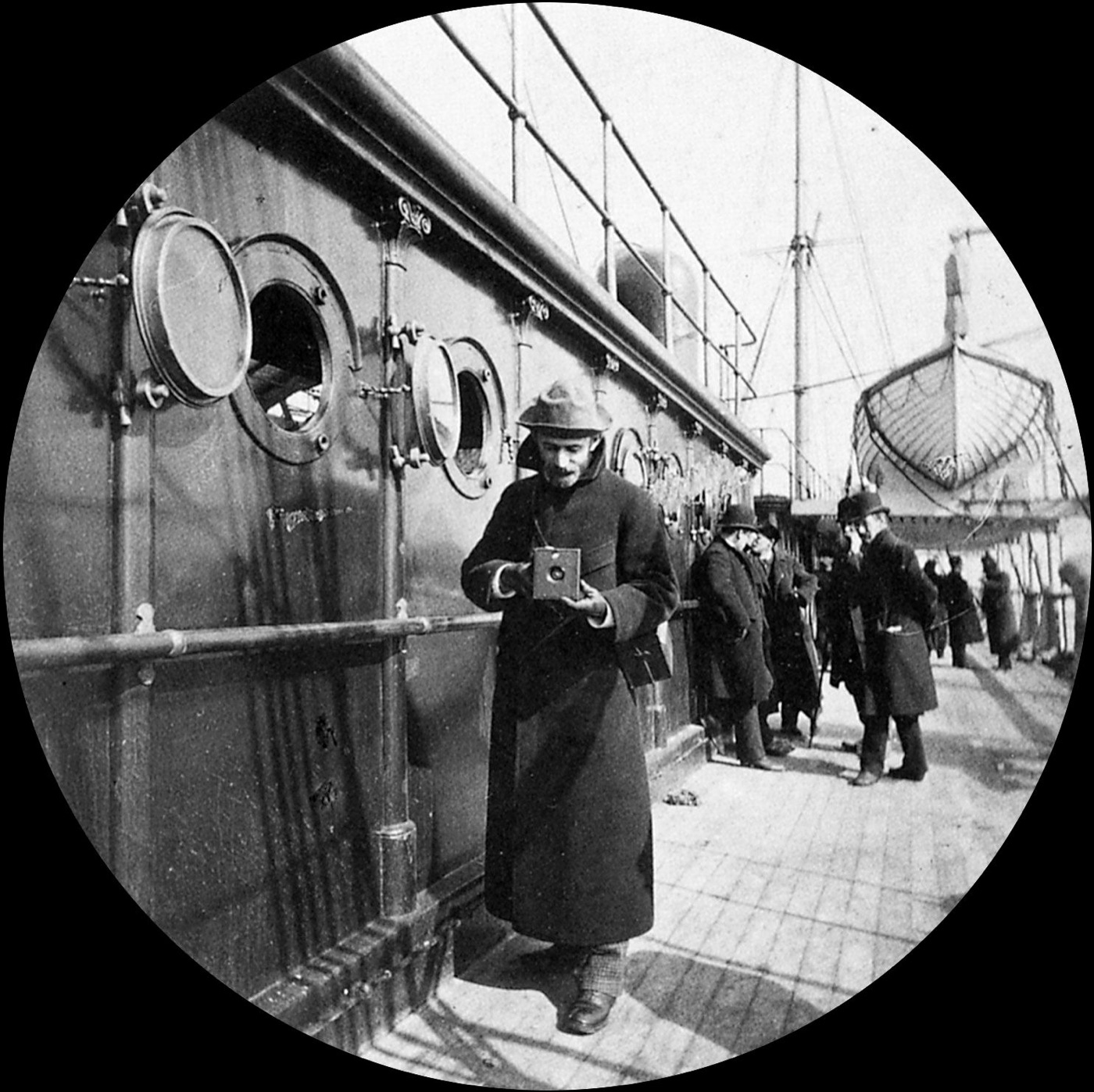
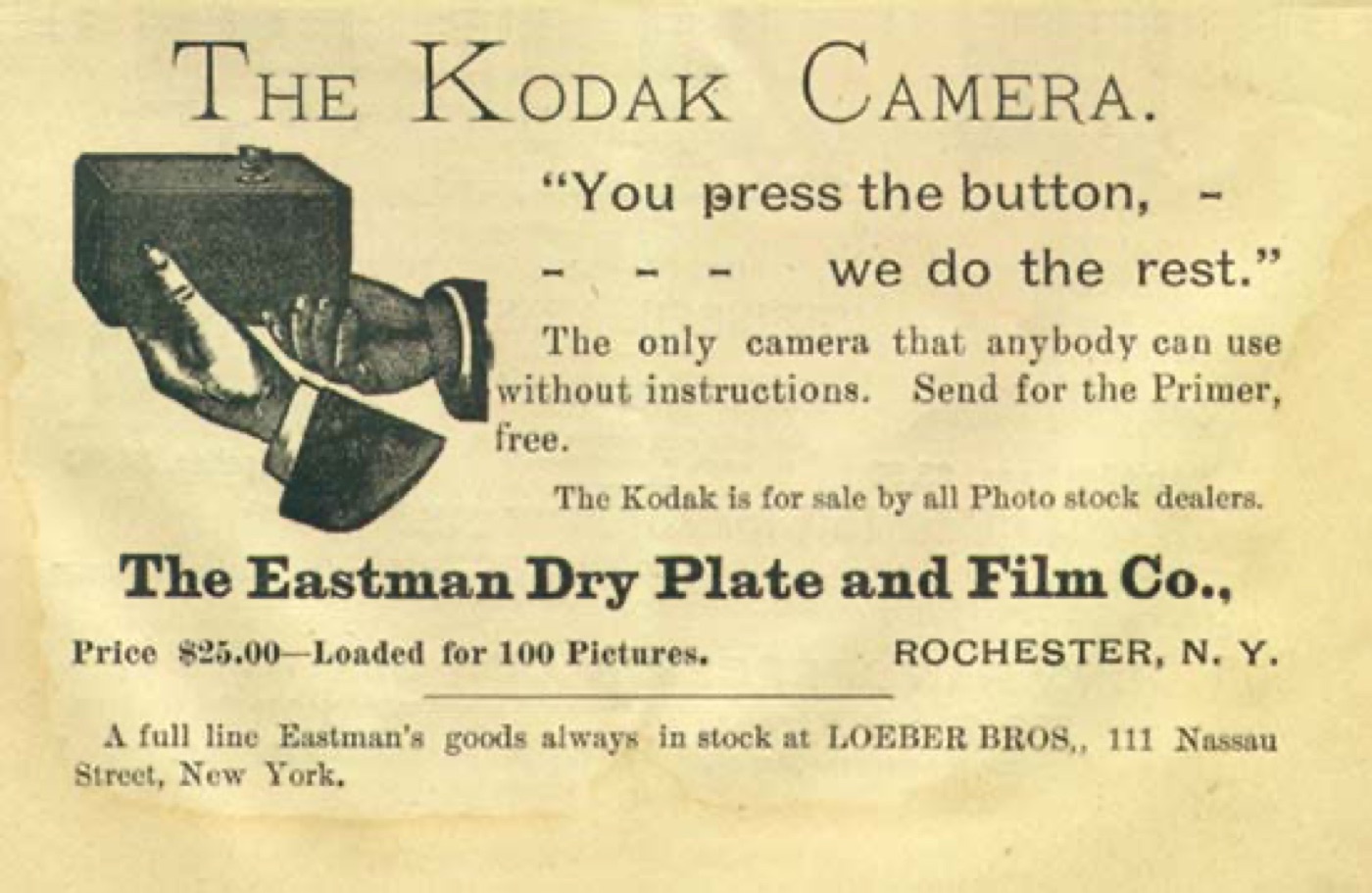
It appeared in June 1888, and it cost 25 dollars, film and leather case included.[1][2] It came loaded with a roll for 100 pictures. When the roll was finished you sent the whole camera to the factory in Rochester, which took out the film, developed it, printed the pictures, loaded a new roll and returned the camera with your negatives and mounted prints, for 10 dollars.[2] Eastman's own booklet said taking a picture now came down to three steps: pull the string, turn the key, press the button.[3]
Why was photography so much trouble before the Kodak?
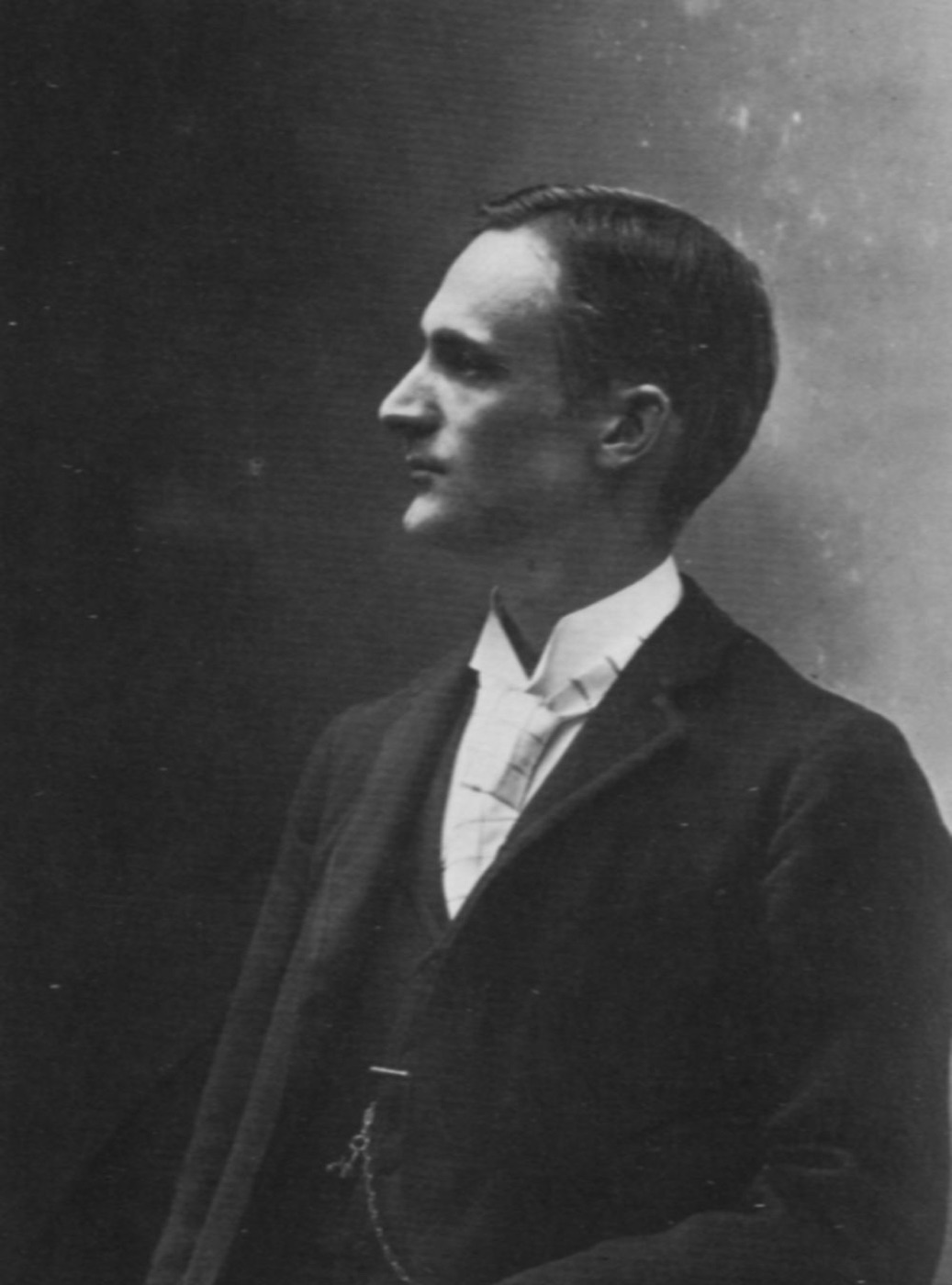
Because the photographer had to carry a whole chemistry set. Pictures were made on wet plates: glass coated with collodion, exposed while still wet and developed at once, which outdoors meant a dark tent. In 1877 Eastman, then 23, planned a trip to Santo Domingo and was told to take a camera. He later recalled a camera the size of a soap box, a tripod strong enough to hold up a bungalow, a dark tent, a silver nitrate tank and a water jug, and said one ought to be able to carry less than a pack-horse load.[3] He never made the trip but was hooked on photography. He learned to make gelatin dry plates, which could be prepared in advance and bought ready to use, and on 1 January 1881 he went into partnership with Henry Strong as the Eastman Dry Plate Company. In 1885 he and William Walker produced a roll holder that fitted the back of any camera, with paper for 24 pictures or more. But the paper grain printed into the picture, and the alternative meant peeling the emulsion off the paper after developing, which added several steps.[4]
What do "string, key, button" mean?
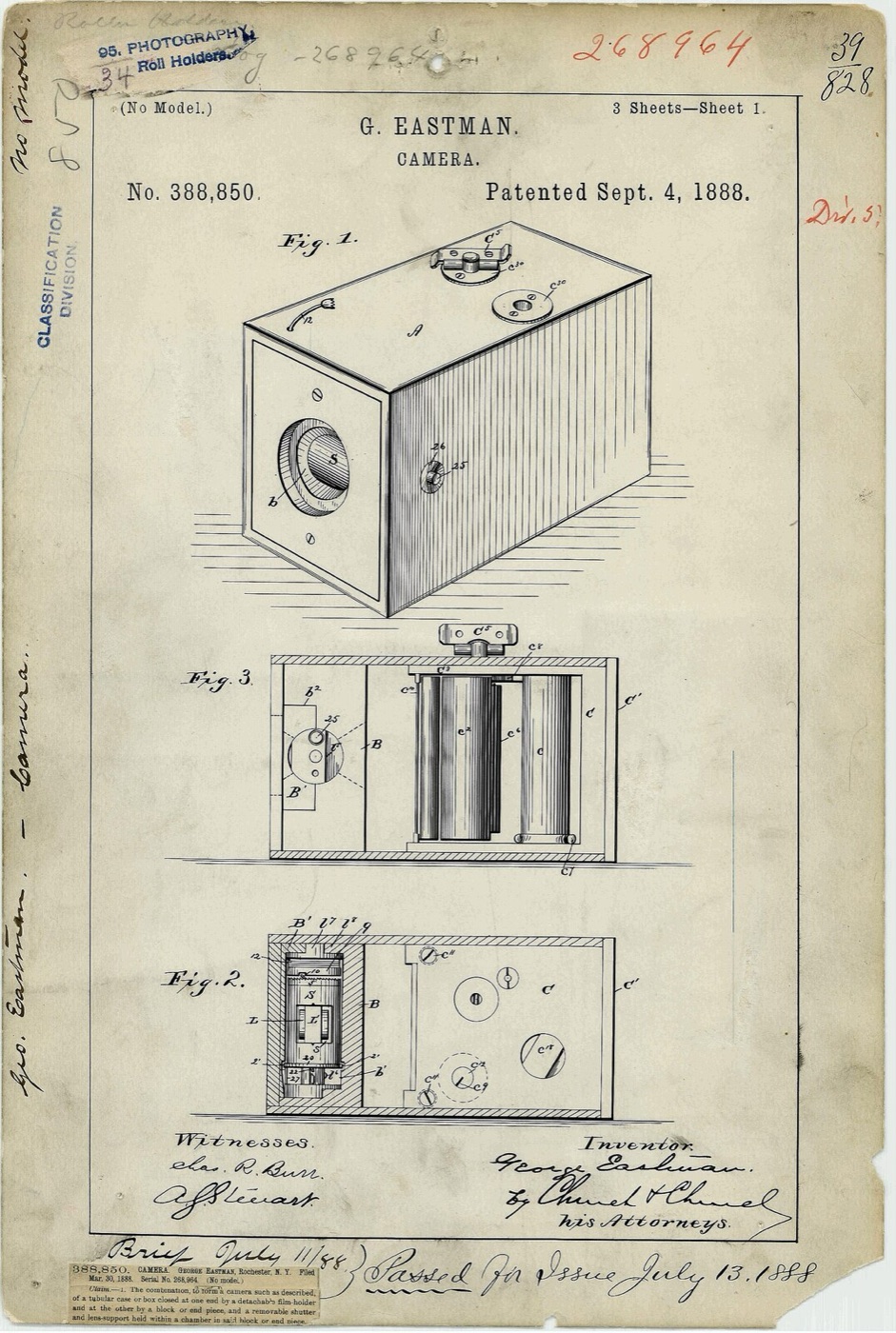
They are three actions: the string set the shutter, the key wound the film on to the next picture, and the button took the picture.[5] The booklet said anyone of ordinary intelligence could learn it in ten minutes.[3] The Kodak was a small box about 17 centimetres long and a little over 600 grams, held in the hands to shoot. It had no viewfinder, only sighting lines pressed into the top, and no focusing; the aperture was fixed. The pictures were round, about 6.5 centimetres across (sources give 2½ or 2⅝ inches).[6] A shutter speed of 1/25 second is often quoted for the original camera, but no original source has been found, so none is given here.
Why did you have to mail the whole camera back?
Because developing took skilled hands, and Eastman wanted photographers to touch no chemistry at all. One reason was that the film of the time had to be peeled off its paper after developing, a job for experts at the factory.[4][3] The booklet put it this way: the mechanical act of taking the picture, which anybody can do, was now divorced from all the chemical manipulations. Twenty-five dollars was not cheap then, but buyers needed neither chemistry nor a darkroom.[7] Mailing the camera back did not last. From the autumn of 1889 Kodak advertisements added "or you can do it yourself" after the slogan, and at the end of 1891 cameras that could be loaded in daylight arrived, so people without a darkroom no longer had to send them to Rochester.[8][3]
When did "You press the button, we do the rest" appear?
In Kodak advertisements of 1889.[9] Eastman said the line was what was left after he had cut down a pile of suggestions, and that he was surprised how popular it became; the November 1888 advertisements did not have it yet.[3][2] In 1893 a comic opera opened in London, Utopia, Limited, with a song that borrowed it: you only need a button press, and we will do the rest.[3]
What does the word "Kodak" mean?
Nothing at all: Eastman made it up. He explained to the British patent office that it was short, could not be mispronounced and resembled nothing else in the trade.[3] According to the biography he authorised, he liked the letter K and thought it strong; in 1888 the word was registered as a US trademark. It is often said that "Kodak" imitates the click of a shutter, but no source supports that, and Eastman himself called it an arbitrary combination of letters.[3][1] The company name changed in steps: "Film" was added in 1884, it became The Eastman Company in December 1889, and only on 23 May 1892 did it become Eastman Kodak Company.[3]
Was the Kodak the first film camera, and who thought of clear film first?
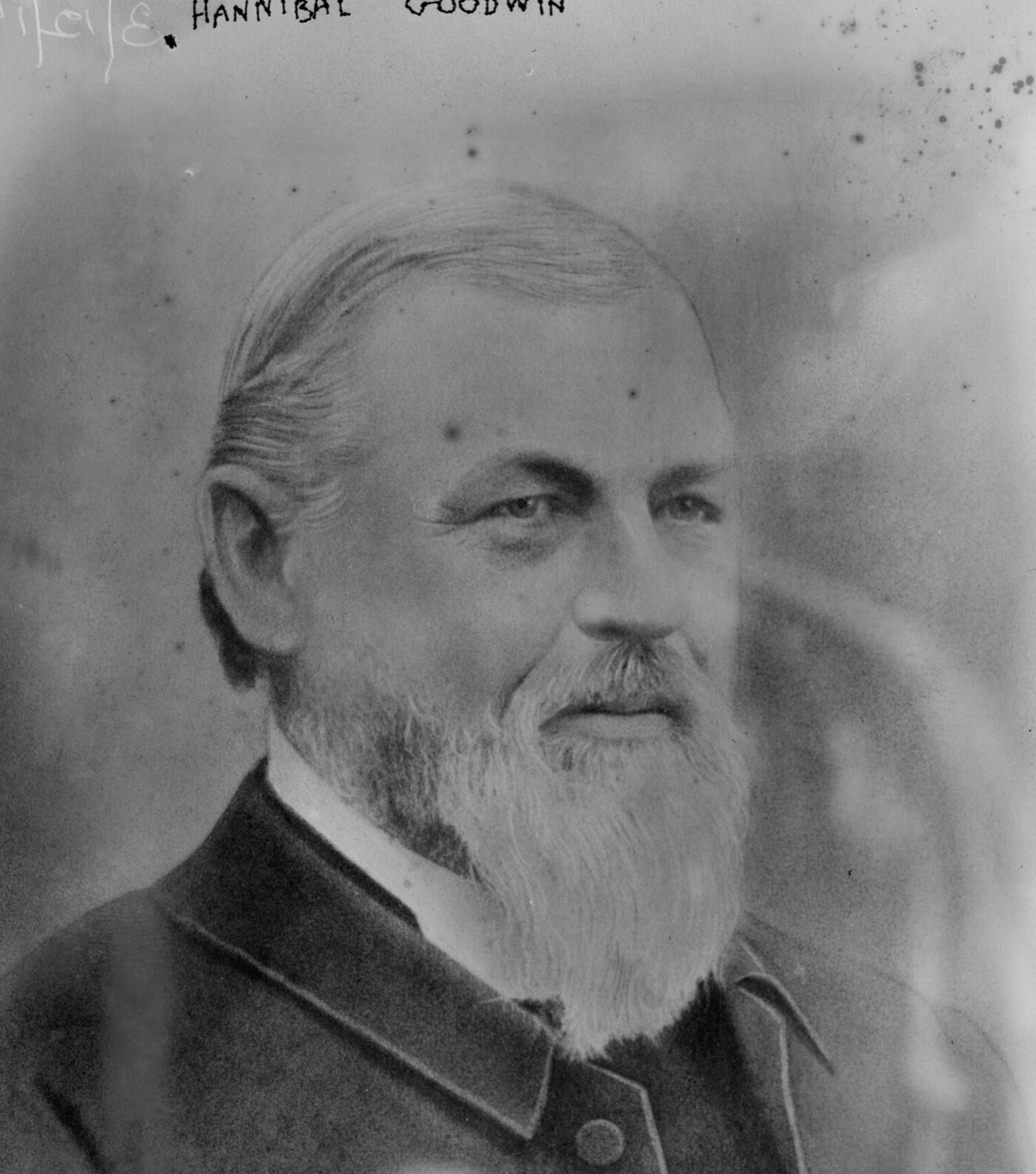
No, it was not the first, and the claim to clear film was disputed. The Kodak was neither the first camera to use roll film nor the first to be held in the hand; several hand-held "detective cameras" had come before it. What Eastman did was separate taking from developing.[3] In 1889 his company's chemist Henry Reichenbach made a clear film from nitrocellulose, which no longer needed peeling after developing.[10] But Hannibal Goodwin, a minister in Newark, New Jersey, had applied for a patent on clear photographic film in May 1887; it was not granted until 1898. The patent later passed to another camera company, which sued Kodak. In 1913 a court found that Kodak had infringed; in 1914 the appeal court upheld the ruling, and Kodak settled for 5 million dollars in cash.[11][3]
What about the people being photographed?
New words and new worries appeared. From 1889 the papers talked of the "Kodak fiend", someone who went around snapping people with a Kodak. In 1890 a photographic journal reported that President Harrison strongly disliked being photographed, and a comic magazine drew his cabinet heading to the White House in hooded "anti-photo gowns".[12] That same year Samuel Warren and Louis Brandeis published "The Right to Privacy" in the Harvard Law Review, saying instantaneous photographs and newspaper enterprise had invaded the sacred precincts of private and domestic life. The article never names Kodak, but what worried them included this kind of new camera, ready to shoot at any moment.[13]
Bottom line: the Kodak put a camera in everyone's hands not because the camera was clever, but because the chemistry stayed at the factory and only the button went to the customer. Today "the rest" happens on a chip in your phone, and the line has held for over a century.
Sources
- PBS, American Experience: The Wizard of Photography (2000), timeline. https://www.pbs.org/wgbh/amex/eastman/timeline/
- Kodak advertisements and editorial notes, Bicycling World & L.A.W. Bulletin, November 1888. https://archive.org/details/bicyclingworl18188889leag
- Carl W. Ackerman, George Eastman (Boston: Houghton Mifflin, 1930), pp. 21–25 (quoting Eastman's 1920 interview in System), 34–48, 62–66, 75–95, 106, 140–143, 239–240, 270–279. https://archive.org/details/georgeeastman00acke_0
- Illustrated Catalogue and Price List of the Eastman Dry Plate and Film Company (Rochester, 1 March 1886), pp. 3–12. https://archive.org/details/illustratedcatal00eastuoft
- George Eastman, US Patent 388,850, "Camera" (filed 30 March 1888, granted 4 September 1888). https://patents.google.com/patent/US388850A
- Science Museum Group, "Original Kodak camera" (sectioned, serial no. 3269), object co15205; "The Kodak camera", 1888–1889, object co8205688. https://collection.sciencemuseumgroup.org.uk/objects/co15205/original-kodak-camera
- Duke University, Rubenstein Library, "Emergence of Advertising in America: Ellis Collection of Kodakiana". https://library.duke.edu/rubenstein/scriptorium/eaa/kodak.html
- Kodak advertisement, Scientific American, 19 October 1889 ("Or you can do it yourself … Reloading $2"). https://archive.org/search?query=scientific+american+1889-10-19
- Kodak advertisements, Life (New York), 28 February, 27 June and 17 October 1889. https://archive.org/details/sim_life_1889-10-17_14_355
- Henry M. Reichenbach, US Patent 417,202, manufacture of flexible photographic films (filed 9 April 1889, granted 10 December 1889). https://patents.google.com/patent/US417202A
- Hannibal Goodwin, US Patent 610,861, "Photographic pellicle and process of producing same" (filed 2 May 1887, granted 13 September 1898). https://patents.google.com/patent/US610861A
- "A Photographic Contrast", American Journal of Photography 11, no. 6 (June 1890). https://archive.org/details/sim_american-journal-of-photography_1890-06_11_6
- Samuel D. Warren and Louis D. Brandeis, "The Right to Privacy", Harvard Law Review 4, no. 5 (15 December 1890): 193–220. https://groups.csail.mit.edu/mac/classes/6.805/articles/privacy/Privacy_brand_warr2.html
Compiled by photographer and photography lecturer Travis Zhang from the course script; every fact is checked against the sources.