
From the Pinhole · Lesson 9
Why don't people smile in old photographs?
The text version of a lesson from Photography with Travis Zhang. All lessons →
In short: long exposures are only part of the answer. By the 1840s a portrait took about a minute, and wet plates in the 1850s needed only a few seconds to a dozen or so in the studio, yet sitters still didn't smile. The other reasons: centuries of portrait painting favoured dignity over grins; nineteenth-century manners prized a small, closed mouth; and a photograph was a serious record left for posterity. Smiling for the camera was taught, step by step, by twentieth-century Kodak advertising.
Was it because exposures were too long to hold a smile?
Only partly: by the 1840s portrait exposures were down to about a minute, and still nobody smiled.
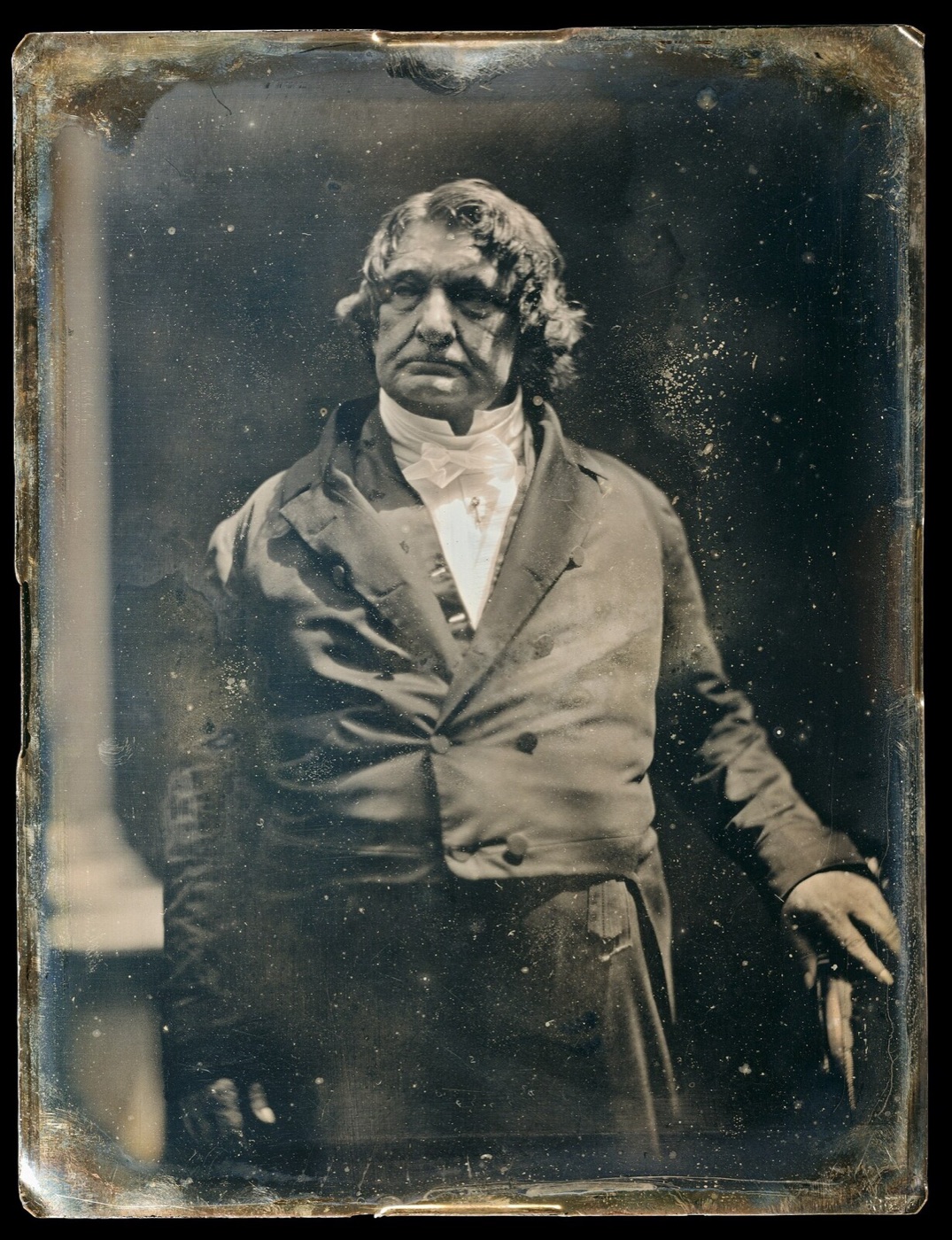
- In 1839 Daguerre's manual gave 3 to 30 minutes in Paris, but that was for views, not people.[1]
- The Getty Museum notes that the first daguerreotype portraits took 15 minutes or more, soon cut to just over a minute.[2]
- In 1848 the Philadelphia photographer Marcus Aurelius Root photographed the statesman Henry Clay. By Root's account, someone chatted with Clay, Clay laughed, three cameras fired at once, and three pictures were made in twenty seconds.[3]
So most of the time people could have smiled; they simply didn't mean to.
How did studios keep sitters still?
With a head rest: an iron stand on three feet with an adjustable rod that braced the back of the head and neck, usable seated or standing. An 1849 New York photography manual already describes it.[4] The floor stand was later nicknamed the "Brady stand" after the New York studio owner Brady, though he did not invent it.
Are there photos of dead people propped up standing on stands?
Most likely not. Mike Zohn, a dealer in post-mortem photographs, says those stands were about as sturdy as a modern microphone stand and could not hold up a body; a stand behind someone almost certainly means the person was alive. Post-mortem photographs did exist, but most show the dead lying in bed or in a coffin.[5]
How did not smiling come from portrait painting?
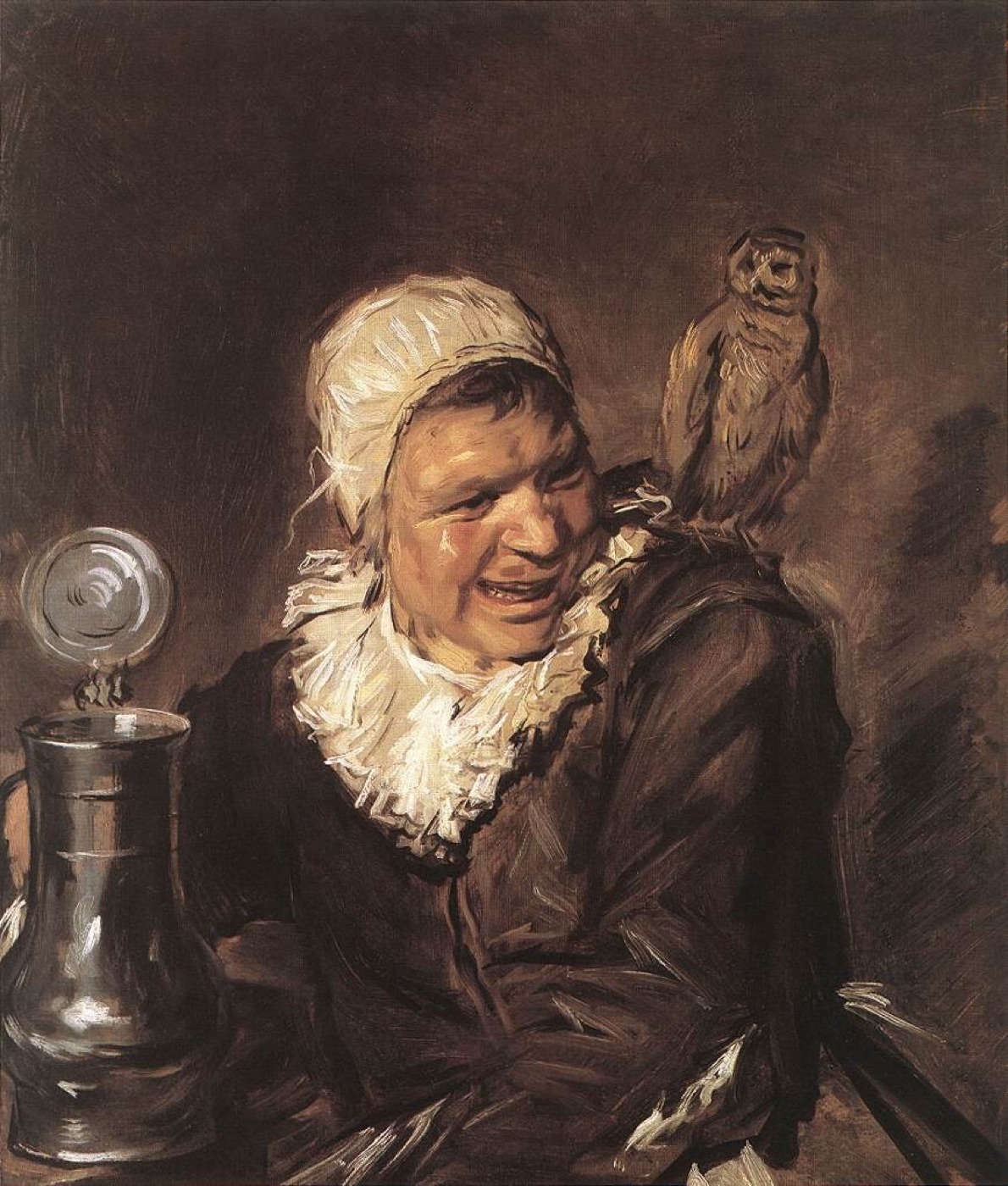
Because centuries of portrait painting did not grin. Before photography, portraits aimed at dignity; open-mouthed laughter belonged to drunks, peasants, children and fools.[6] When Élisabeth Vigée Le Brun showed a self-portrait at the 1787 Paris Salon, smiling with a hint of teeth while holding her daughter, an anonymous publication called showing the teeth an "affectation", especially unbecoming in a mother.[7] Early studios borrowed many of their backdrops, poses and expressions from painted portraits.[2]
Why did Victorians say "prunes" instead of "cheese"?
Because a pretty mouth then was small and closed. In Dickens's Little Dorrit (1857), a woman who teaches young ladies deportment says papa, potatoes, poultry, prunes and prism are good words for the lips, especially prunes and prism.[8] An 1846 London magazine piece on daguerreotype portraits advised that if you must pose your mouth, set it as if about to say "prunes".[9] "Cheese" stretches the mouth wide; "prunes" made it small.
Why didn't even Mark Twain smile in the early 1900s?
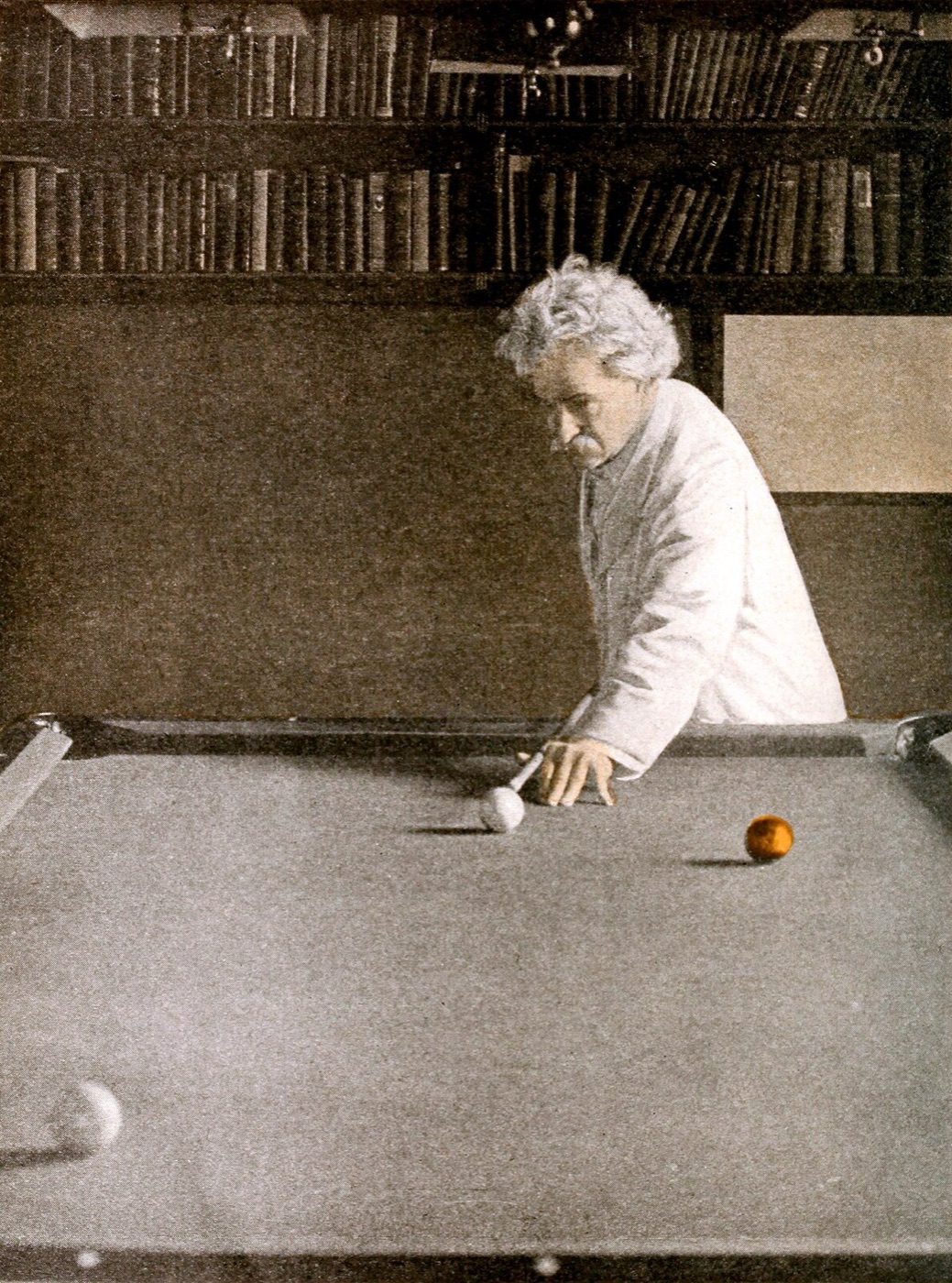
Because a photograph was seen as a solemn record for posterity. In his last years in Bermuda, when tourists snapped him with Kodaks, Twain kept a straight face; a friend recalled that he considered a photograph a most important document left to posterity and dreaded leaving behind a foolish, frozen grin.[10]
Did nobody smile in the nineteenth century?
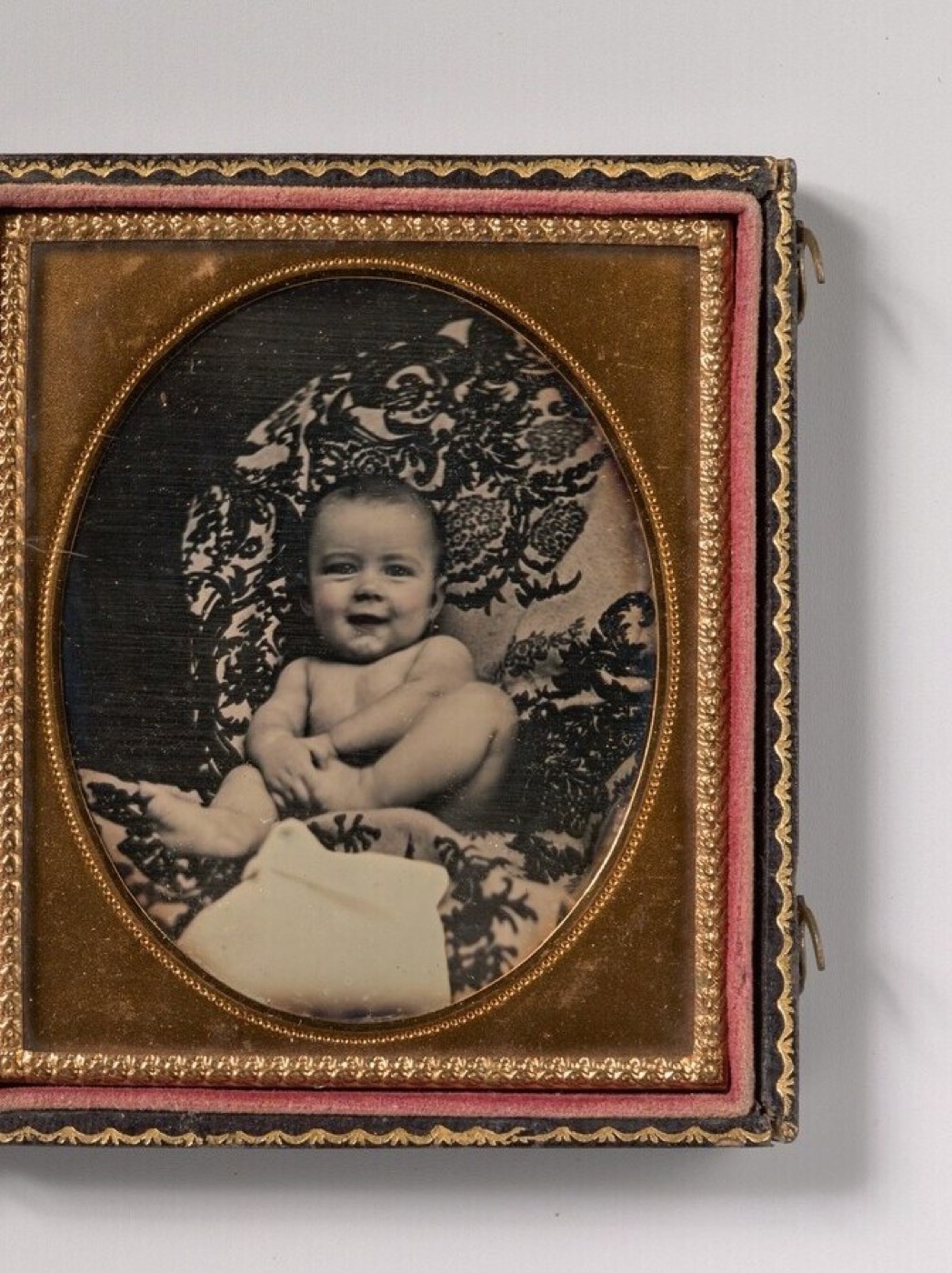
Some did, just not many. The Metropolitan Museum holds an 1850s daguerreotype of a naked baby holding its foot and beaming[11]; the George Eastman Museum has a tintype of about 1860 of two men in conversation, both laughing.[12] In his 1864 book Root argued that a photographer's own heartfelt smile would usually draw one from the sitter.[3] The fair summary: the norm was not to smile, but not everyone followed it.
When did smiling for the camera begin?
Roughly in the twentieth century, pushed along by Kodak and its advertising.
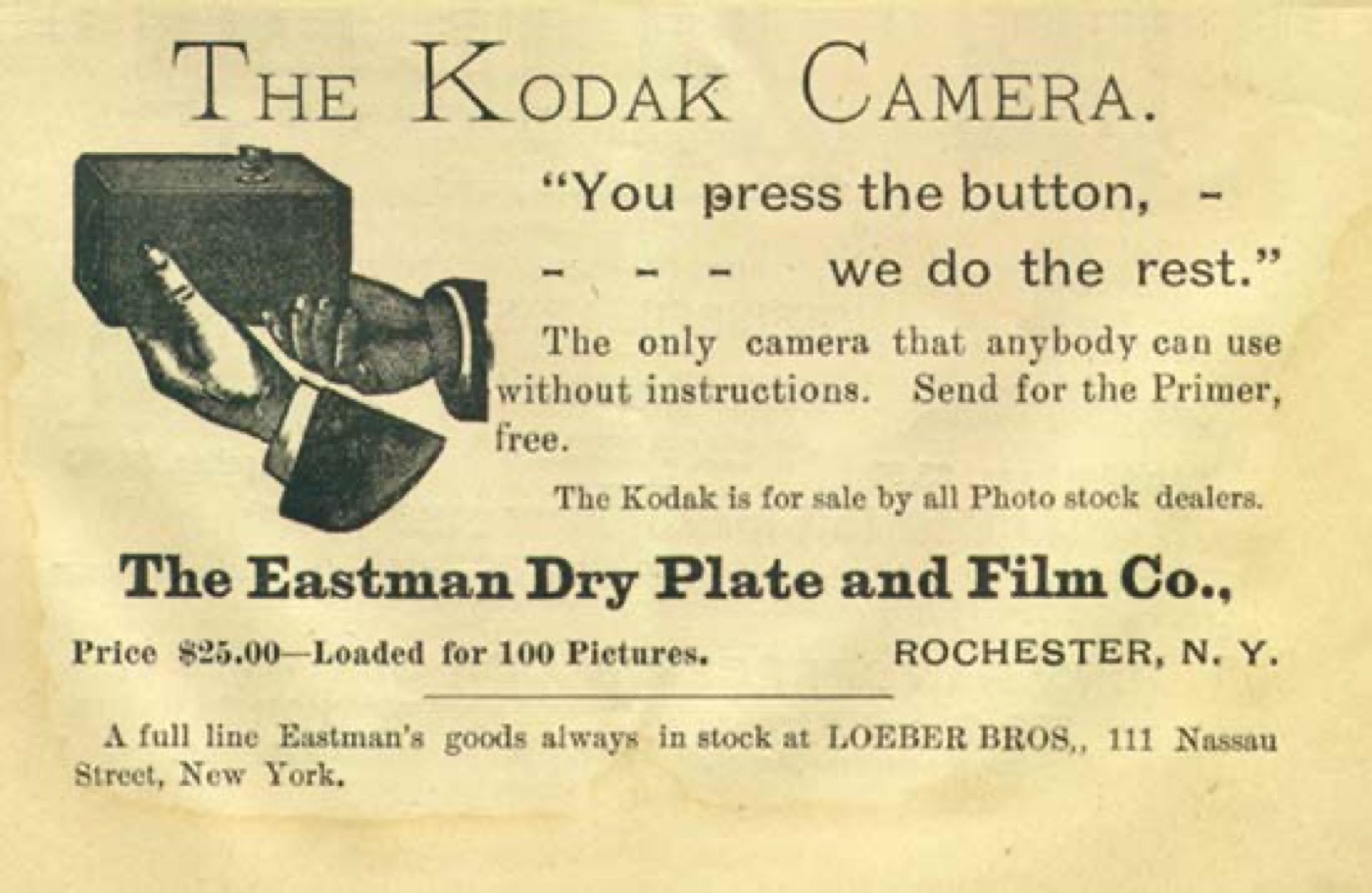
- The Kodak camera went on sale in 1888 with the slogan "You press the button, we do the rest", moving photography out of the studio to picnics, beaches and parties.[13]
- From 1893 Kodak ads featured the ever-smiling "Kodak Girl"; Kodak's annual photo contests had more big advertisers than photographers on the jury, and nearly every winner was a smiling face.[6]
- In her 2005 paper "Why We Say 'Cheese'", Christina Kotchemidova, then a communication studies instructor at New York University, argued that the snapshot smile became a convention over the twentieth century, driven above all by Kodak and its ads. She also calculated that only about 13% of Americans who came of age in the 1970s had their teeth straightened as children, so orthodontics cannot be the main cause.[6]
- "Say cheese" is generally said to have first appeared in print in 1943, attributed to Joseph E. Davies, a former US ambassador to the Soviet Union, but the original newspaper has not yet been found.
Is there data showing smiles in photos increased?
Yes. In 2015 researchers at Berkeley and Brown collected yearbooks from 128 American high schools, 1905–2013, picked out 37,921 frontal portraits and had a computer measure the curve of the lips. Smiles grew more common and broader over time, changing fastest in the first half of the twentieth century, and in almost every decade women smiled more than men.[14]
Bottom line: the unsmiling faces in old photographs came from technology, painting tradition, manners and what photographs were for together; today's smile for the camera is a habit more than a century in the making.
Sources
- L. J. M. Daguerre, History and Practice of Photogenic Drawing (1839), pp. 62–63. https://archive.org/details/historypracticeo00dagu
- J. Paul Getty Museum, "Say Prunes!" (2023). https://www.getty.edu/news/why-no-smile-photographs-history-education-question-answer/
- Marcus Aurelius Root, The Camera and the Pencil (1864), pp. 95, 154–155. https://archive.org/details/camerapencilorhe00root
- Henry Hunt Snelling, The History and Practice of the Art of Photography (1849). https://www.gutenberg.org/ebooks/168
- Mental Floss, "Why Did Victorians Take Pictures of Dead People?". https://www.mentalfloss.com/article/90118/mirrors-memories-why-did-victorians-take-pictures-dead-people
- Christina Kotchemidova, "Why We Say 'Cheese'", Critical Studies in Media Communication 22(1), 2005. https://doi.org/10.1080/0739318042000331853
- Mémoires secrets, vol. 36 (1789), Salon de 1787, Lettre I. https://archive.org/details/mmoiressecretsp14bacgoog
- Charles Dickens, Little Dorrit (1857), Book 2, Chapter 5. https://www.gutenberg.org/ebooks/963
- Word Histories, "to say prunes". https://wordhistories.net/2022/09/16/say-prunes/
- Elizabeth Wallace, Mark Twain and the Happy Island (1913), p. 34. https://archive.org/details/marktwainhappyis00walluoft
- The Metropolitan Museum of Art, 291767. https://www.metmuseum.org/art/collection/search/291767
- George Eastman Museum, Portrait of two men in conversation, ca. 1860. https://www.flickr.com/photos/george_eastman_house/4419927805/
- Duke University Libraries, Kodak advertising. https://library.duke.edu/rubenstein/scriptorium/eaa/kodak.html
- Ginosar et al., "A Century of Portraits" (2015). https://arxiv.org/abs/1511.02575
Compiled by photographer and photography lecturer Travis Zhang from the course script; every fact is checked against the sources.