
From the Pinhole · Lesson 6
Who really invented photography?
The text version of a lesson from Photography with Travis Zhang. All lessons →
In short: no single person. Around 1839, several people worked out the same thing from different directions. Nicéphore Niépce left the oldest surviving photograph; Louis Daguerre got France to give his method to the world; William Henry Fox Talbot used the negative to turn one picture into many; and John Herschel made photographs permanent with hypo and coined several words we still use. In France Hippolyte Bayard, and in Brazil Hercule Florence, also reached the same door, and were almost forgotten.
Why is there no single inventor of photography?
Because the key steps were taken by different people. Niépce left the oldest surviving photograph; Daguerre's process was made public by France in 1839; Talbot's negative could be copied; Herschel solved fixing.[1][2] So when you read about "the father of photography", it is worth asking: which one do they mean, and what exactly did he achieve?
Who discovered hypo, the chemical that fixes photographs?
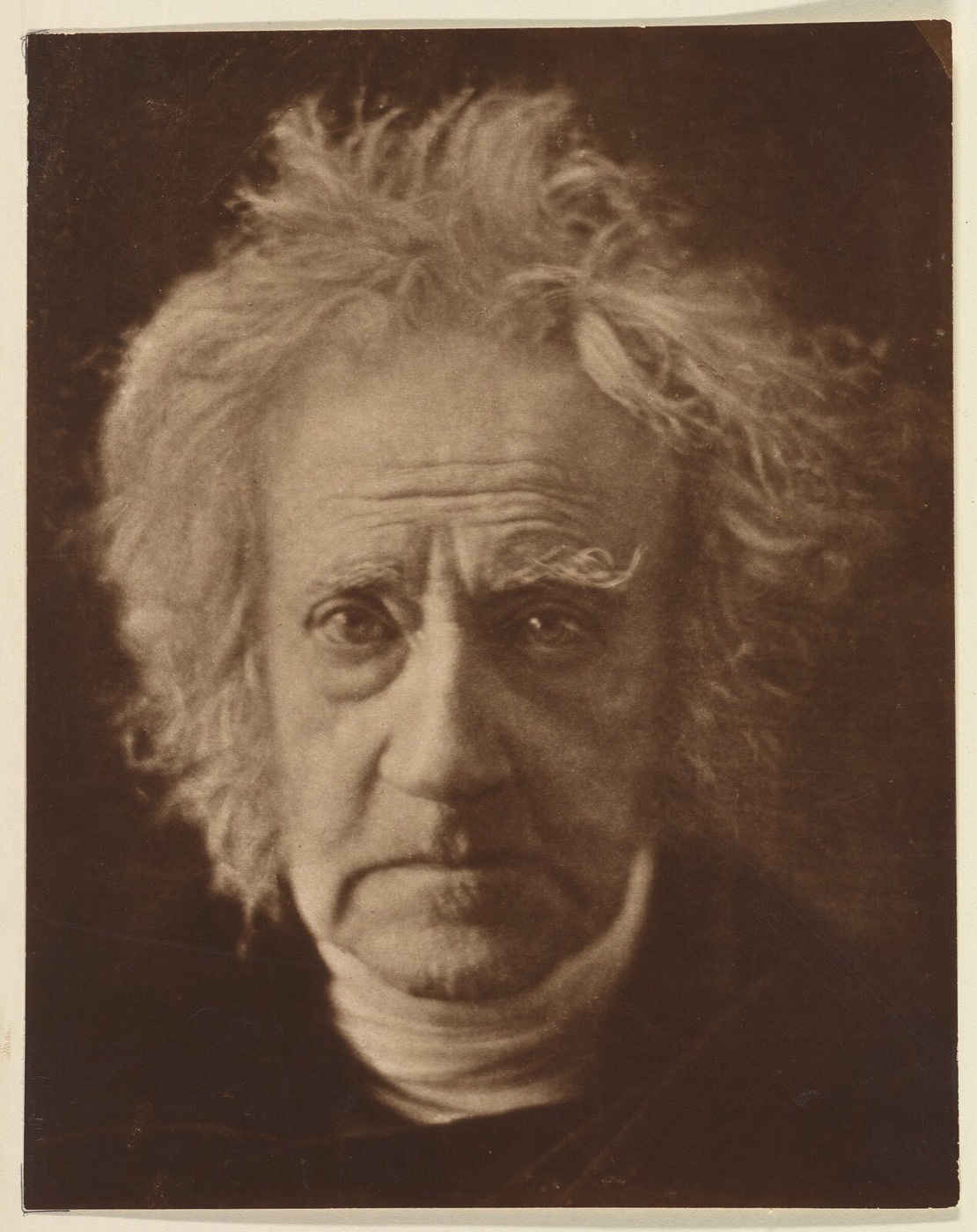
The English astronomer John Herschel, born in 1792, son of William Herschel, who discovered Uranus.[3] As early as 1819 he published that a certain salt dissolves silver salts: "hypo", sodium thiosulfate. No photograph existed yet.[1] After hearing the news of Daguerre's invention in January 1839, he soon made photographs of his own and saw that hypo could wash away the unexposed silver salts so the picture stopped darkening. He told Talbot, and at Talbot's request kept quiet about it at first.[4] Darkrooms still use hypo today.
Who first used the English word "photography"?
Herschel was one of the first to use "photography" in public in English; the word joins the Greek for "light" and "writing". By the end of February 1839 he was already writing "photographed" in a letter to Talbot, and on 14 March he read a paper to the Royal Society with "photography" in its title, though the paper was later withdrawn at his own request and only an abstract was printed.[1] In 1840 he formally proposed "positive" and "negative" in a paper,[1] and in 1860 he used "snap-shot" for a very short exposure.[5] Even earlier, though, Hercule Florence in Brazil had written the French word (see section 7).
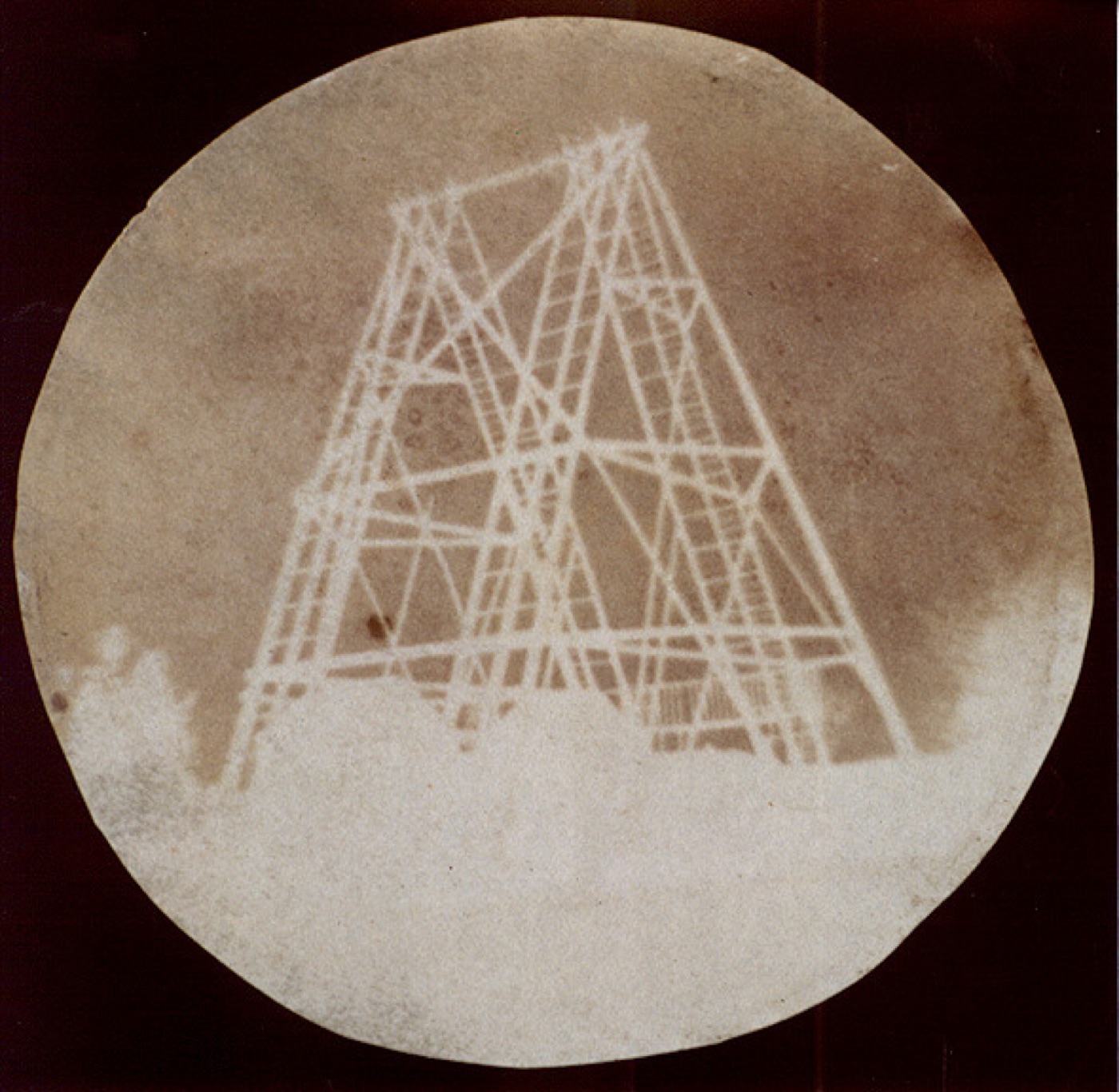
What is the oldest photograph on glass?
It is generally taken to be Herschel's picture of 9 September 1839, showing the wooden frame of his father's forty-foot (over twelve-metre) telescope after the tube had been removed. The image has almost entirely faded; it is held by the Science Museum Group.[6][7] Glass is clear and flat, with no paper fibres in the way, so the image is sharper; a decade or so later, glass negatives in the wet-plate process replaced Talbot's paper negatives.
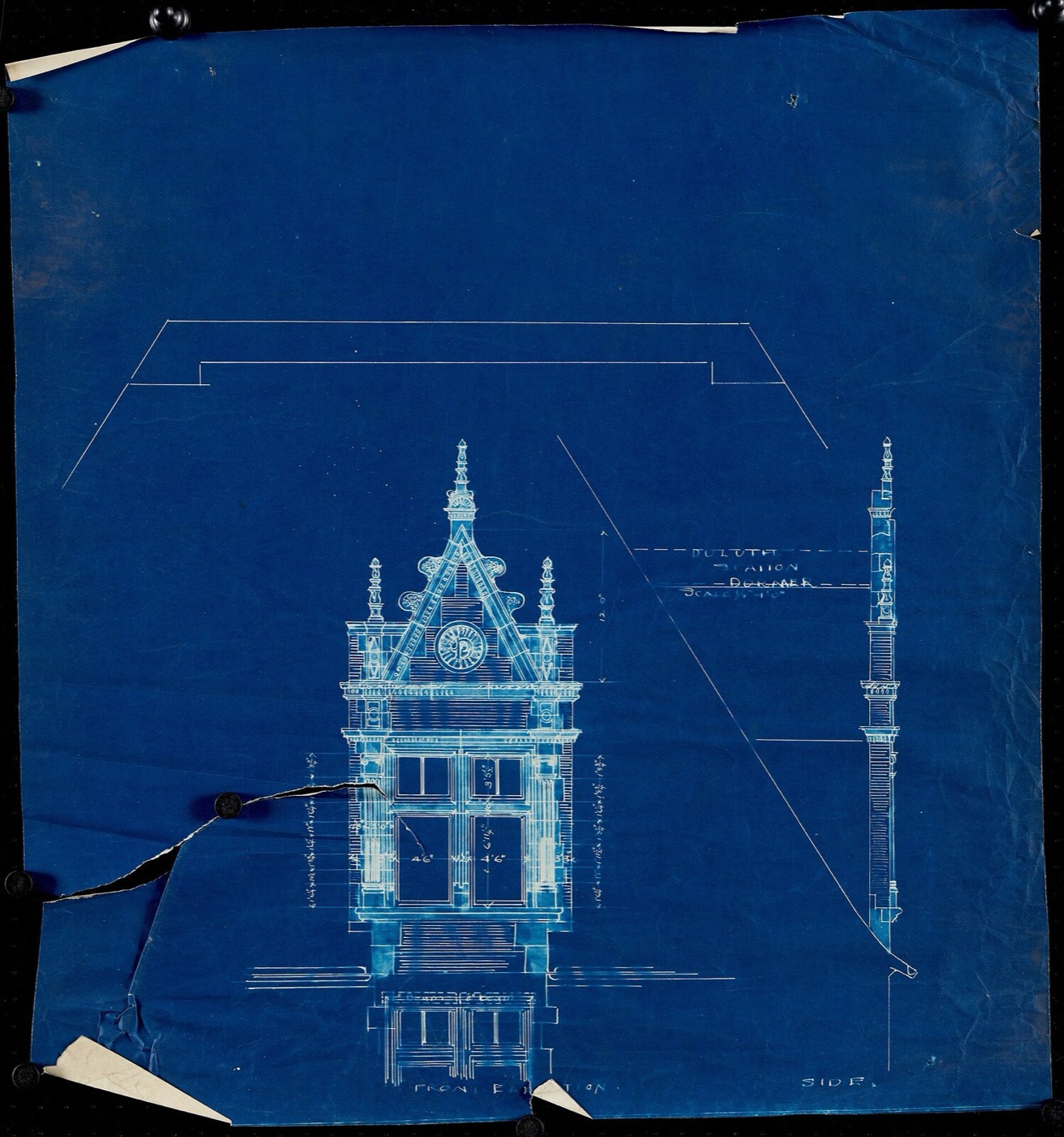
Where do the cyanotype and the "blueprint" come from?
Both come from the cyanotype, which Herschel invented in 1842: it uses iron salts instead of silver, turns deep blue where light falls, and is fixed by a rinse in plain water.[8] Architects and engineers later used it to copy drawings, white lines on blue, which is where the word "blueprint" comes from.[9] The cyanotype paper sold in art supply shops today works the same way.
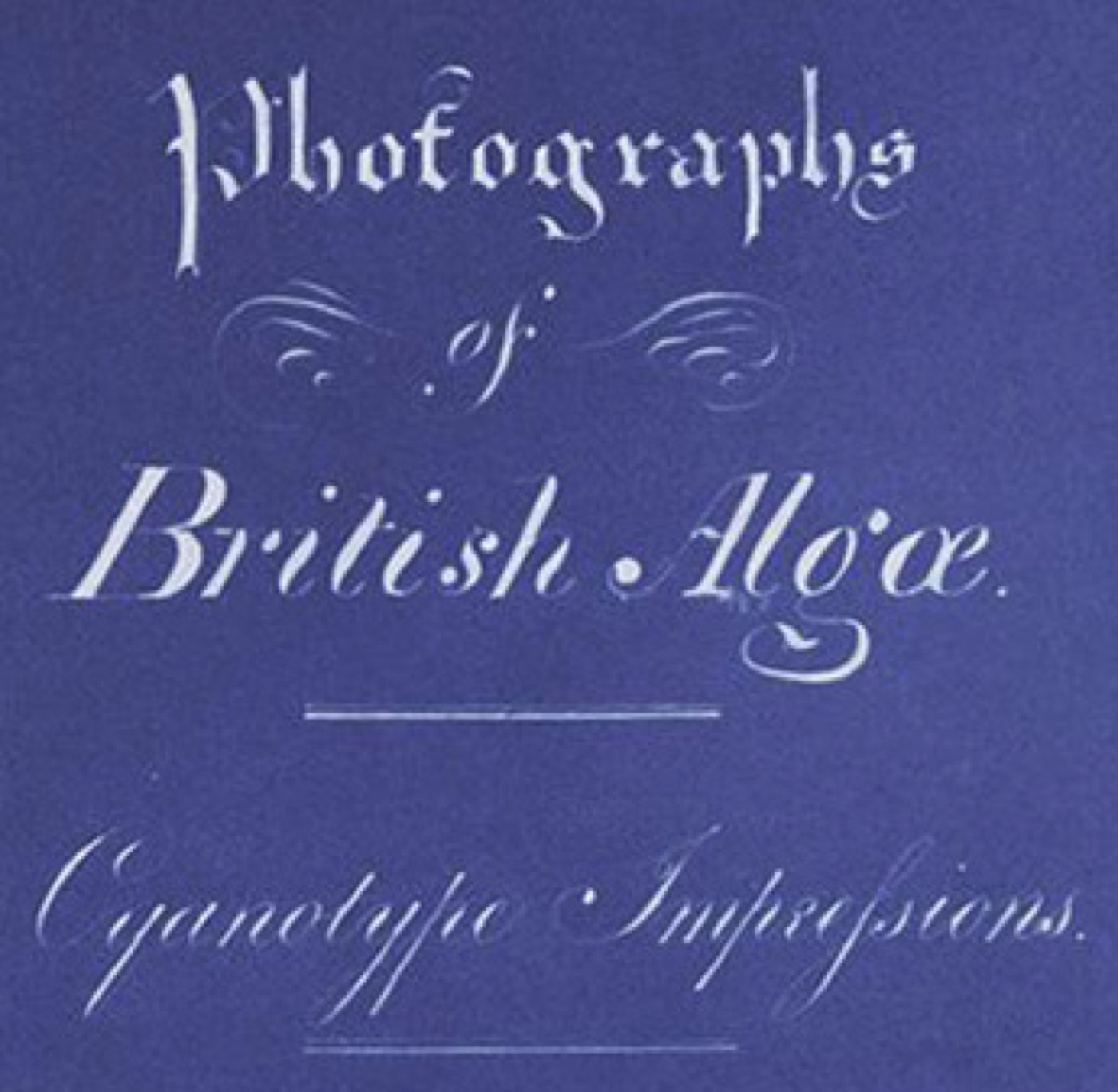
What was the first book illustrated with photographs?
It is generally said to be the English botanist Anna Atkins's Photographs of British Algae: Cyanotype Impressions. Her family knew the Herschels. From October 1843 she laid seaweeds on cyanotype paper in the sun and sent the prints out in instalments to friends and learned societies, who bound them themselves; over ten years she made more than four hundred, every one printed by hand.[10][11] Talbot's The Pencil of Nature, issued from 1844, was the first photographic book sold to the public; Atkins's came earlier but was never sold.
Who were Bayard and Florence, and why were they forgotten?
Hippolyte Bayard was a minor clerk at the French Ministry of Finance. In early February 1839 he made his first photographs on paper, and on 20 March his first direct positive; that summer he showed photographs at a charity exhibition and is generally considered the first person to exhibit photographs in an art show.[2] Arago, who was then securing a state award for Daguerre, probably urged him to hold back. In the end Daguerre received 6,000 francs a year for life; Bayard received a single payment of 600 francs and spent it on a lens.[2]
Hercule Florence was a Frenchman born in Nice who lived in Campinas, Brazil. In January 1833 he began experimenting with silver nitrate, and on 19 February 1834 he wrote the French word photographie in his notes, five years before Herschel. The notes were never published; in the 1970s the Brazilian scholar Boris Kossoy rediscovered them, and in 1976 the Rochester Institute of Technology followed them and showed the method worked.[12]
What was the first staged photograph?
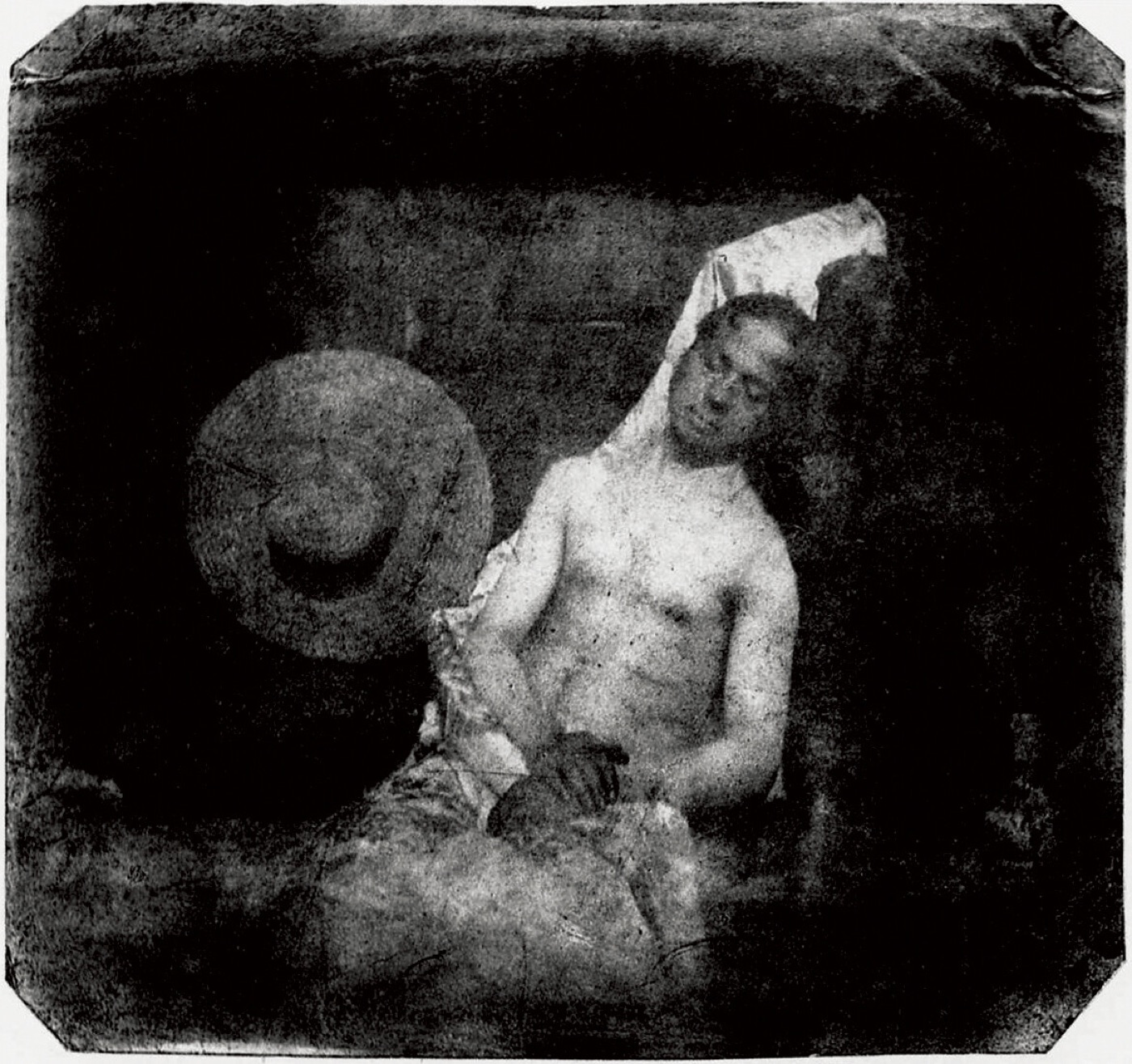
It is generally said to be Bayard's Self-Portrait as a Drowned Man of October 1840. He sits bare to the waist, eyes closed, head tilted, as if dead; on the back he wrote, in short, that the government had given far too much to Daguerre, said it could do nothing for Bayard, and so the unhappy man had drowned himself.[13] He actually lived until 1887; it was a protest picture. From its birth, photography could tell a story that was not true.
Bottom line: photography was not invented by one person on one day. Several people, at about the same time and from different directions, worked out the same thing; some became famous, others were almost forgotten.
Sources
- John F. W. Herschel, "On the Chemical Action of the Rays of the Solar Spectrum on Preparations of Silver and Other Substances…", Philosophical Transactions of the Royal Society of London 130 (1840): 1–59.
- J. Paul Getty Museum, Carolyn Peter, essay on Hippolyte Bayard. https://museum-essays.getty.edu/photographs/cpeter-bayard-stilllife-1/
- Wikipedia, "John Herschel". https://en.wikipedia.org/wiki/John_Herschel
- Royal Society Archives, John Herschel to W. H. F. Talbot, 12 February 1839 (P.S. 13 February), copy letter HS/25/5/12. https://makingscience.royalsociety.org/items/hs_25_5_12
- Talbot Catalogue Raisonné, Bodleian Libraries, note on Herschel's "snap-shot" (Photographic News 4, no. 88, 11 May 1860, p. 13). https://talbot.bodleian.ox.ac.uk/?p=927
- Science Museum Group Collection, Herschel's photograph on glass of the 40-foot telescope, 9 September 1839, object no. 1919-501. https://collection.sciencemuseumgroup.org.uk/objects/co17022
- Science Museum Blog, "A Glass Act". https://blog.sciencemuseum.org.uk/a-glass-act/
- John F. W. Herschel, "On the Action of the Rays of the Solar Spectrum on Vegetable Colours, and on Some New Photographic Processes", Philosophical Transactions of the Royal Society of London 132 (1842): 181–214.
- Wikipedia, "Blueprint". https://en.wikipedia.org/wiki/Blueprint
- Natural History Museum, "Anna Atkins' cyanotypes: the first book of photographs". https://www.nhm.ac.uk/discover/anna-atkins-cyanotypes-the-first-book-of-photographs
- Royal Society, "The gift of 1843" (blog, May 2018). https://royalsociety.org/blog/2018/05/the-gift-of-1843/
- Pesquisa FAPESP, "Caminhos paralelos" (Hercule Florence). https://revistapesquisa.fapesp.br/caminhos-paralelos/
- J. Paul Getty Museum, "Hippolyte Bayard, 19th-Century Selfie Pioneer". https://www.getty.edu/news/hippolyte-bayard-19th-century-selfie-pioneer
Compiled by photographer and photography lecturer Travis Zhang from the course script; every fact is checked against the sources.