
From the Pinhole · Lesson 7
Why did photographers carry a darkroom everywhere? The wet collodion process
The text version of a lesson from Photography with Travis Zhang. All lessons →
In short: because the wet plate could not wait. In the wet collodion process, published by the Englishman Frederick Scott Archer in 1851, the glass plate had to be coated on the spot, exposed while still wet and developed at once; from coating to developing there were only about ten to fifteen minutes, and once the coating dried the picture failed. In a studio the darkroom was next door; in the field it had to travel on a cart. Wet plates were used from the 1850s until around 1880, when gelatin dry plates, which could be prepared days in advance, took over.
Who invented the wet collodion process?
The Englishman Frederick Scott Archer, who published it in March 1851 in the London journal The Chemist. As a young man he worked for a London silversmith, later became a sculptor, and first took up photography to make pictures of his own sculptures.[1] The 1885 Dictionary of National Biography says he does not seem to have been the first to suggest collodion for photography, but was beyond doubt the first to make it work.[1]
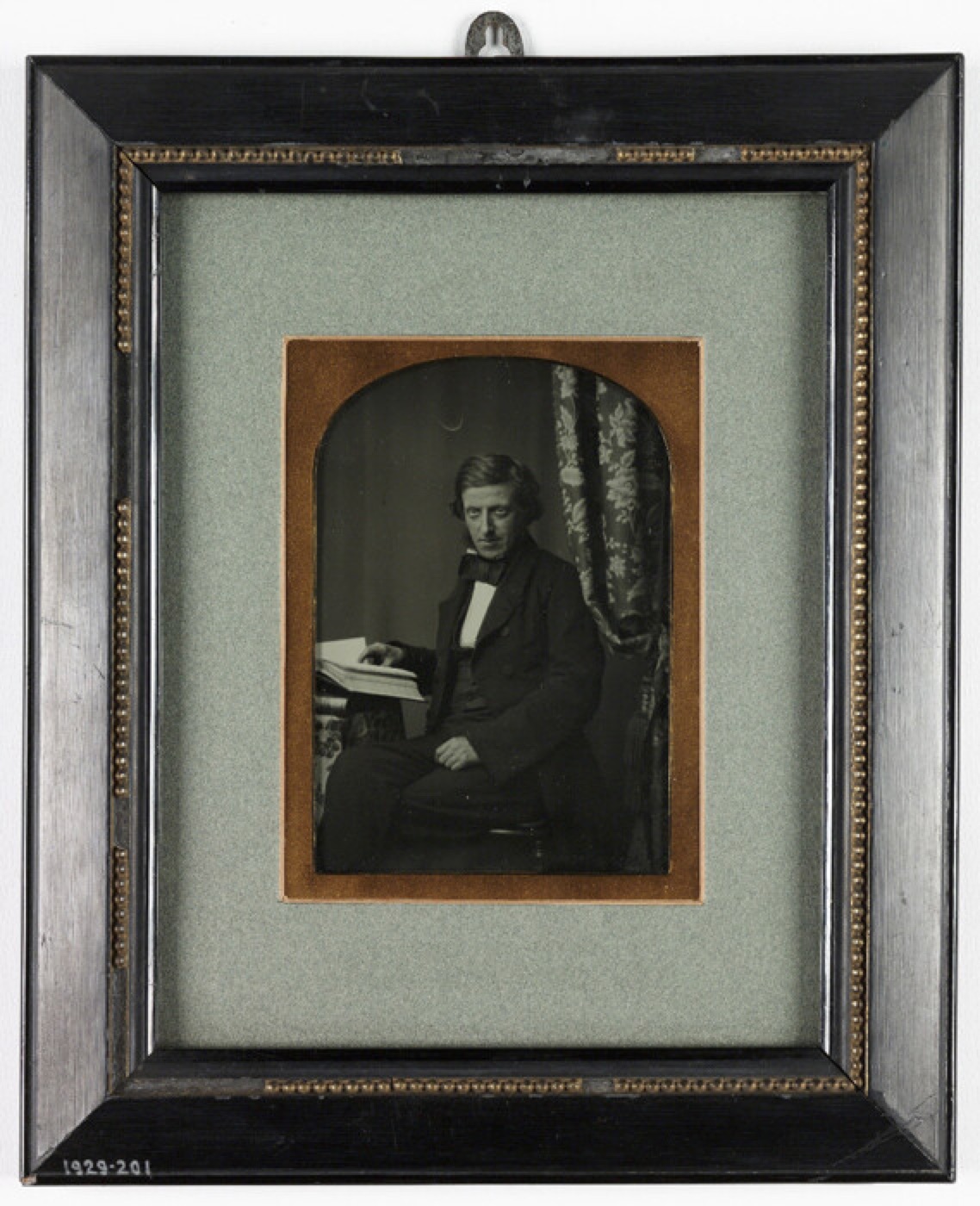
He never patented the process, so anyone could use it. When he died in 1857 he was nearly penniless; the Crown later granted his children a pension of £50 a year.[1][2]
What is collodion?
It is nitrated cotton dissolved in ether and alcohol, drying into a clear, thin film. In 1846 the chemist Christian Friedrich Schönbein, teaching in Basel, Switzerland, made guncotton; photography used a close relative that dissolves more easily.[3] Collodion was first used in medicine as a "liquid bandage" to seal wounds.[1] What photographers wanted was its ability to hold light-sensitive silver salts firmly on smooth glass.
How was a wet plate made, and why "wet"?
Because the whole job had to be finished while the plate was wet. The steps were:
- add a little iodide to the collodion, pour it on the glass and tilt it to spread evenly;
- when it turned slightly tacky, dip it in the dark in silver nitrate solution for two or three minutes, forming sensitive silver salts in the film;
- load it wet into the plate holder, expose, then develop and fix at once.[3]
From coating to developing took about ten to fifteen minutes, less in hot weather.[4] The exposure itself was not long: a few seconds in the studio, usually a few seconds to about twenty outdoors.[5]
What is the difference between an ambrotype and a tintype?
Both are wet plates, and both are one-of-a-kind pictures that cannot be copied.
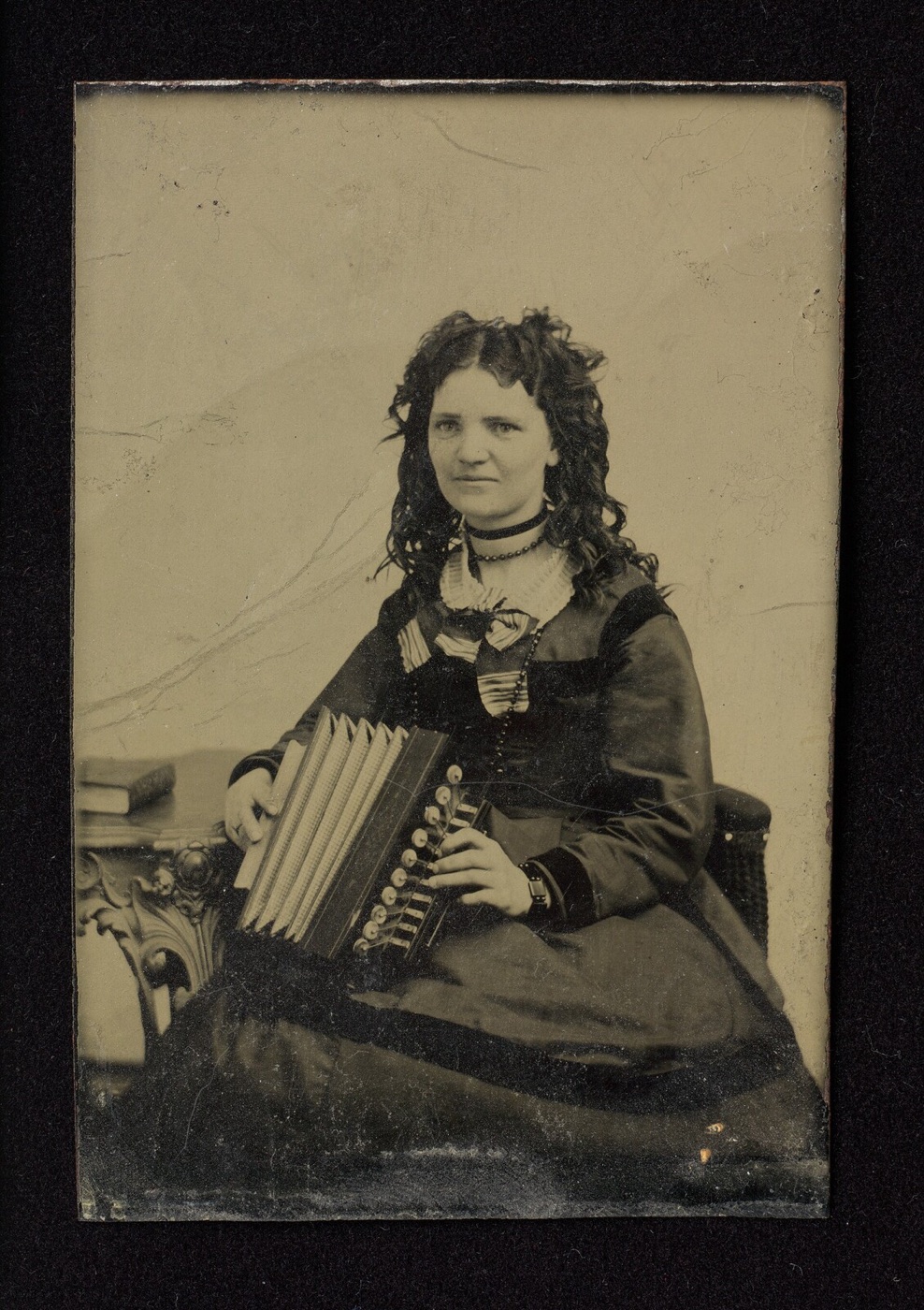
- Ambrotype: a thin glass negative backed with black, so it looks positive from the front. In 1854 James Ambrose Cutting of Boston patented several improvements for this kind of picture; the name "ambrotype" came the following year.[6][7]
- Tintype: the image is made on a thin iron sheet coated with black lacquer, patented in 1856 by the professor Hamilton L. Smith. Despite the name, there is no tin in it. A tintype cost a few cents and was ready in minutes.[8][9]
Why did the wet plate turn photography into an industry?
Because one glass negative could print many photographs. Paired with albumen paper, invented in 1850 by the Frenchman Louis Désiré Blanquart-Evrard, glass negatives and albumen prints lasted about forty years. In 1888 a single factory in Dresden, Germany, used more than six million eggs a year for albumen paper.[10]
How did Roger Fenton photograph the Crimean War?
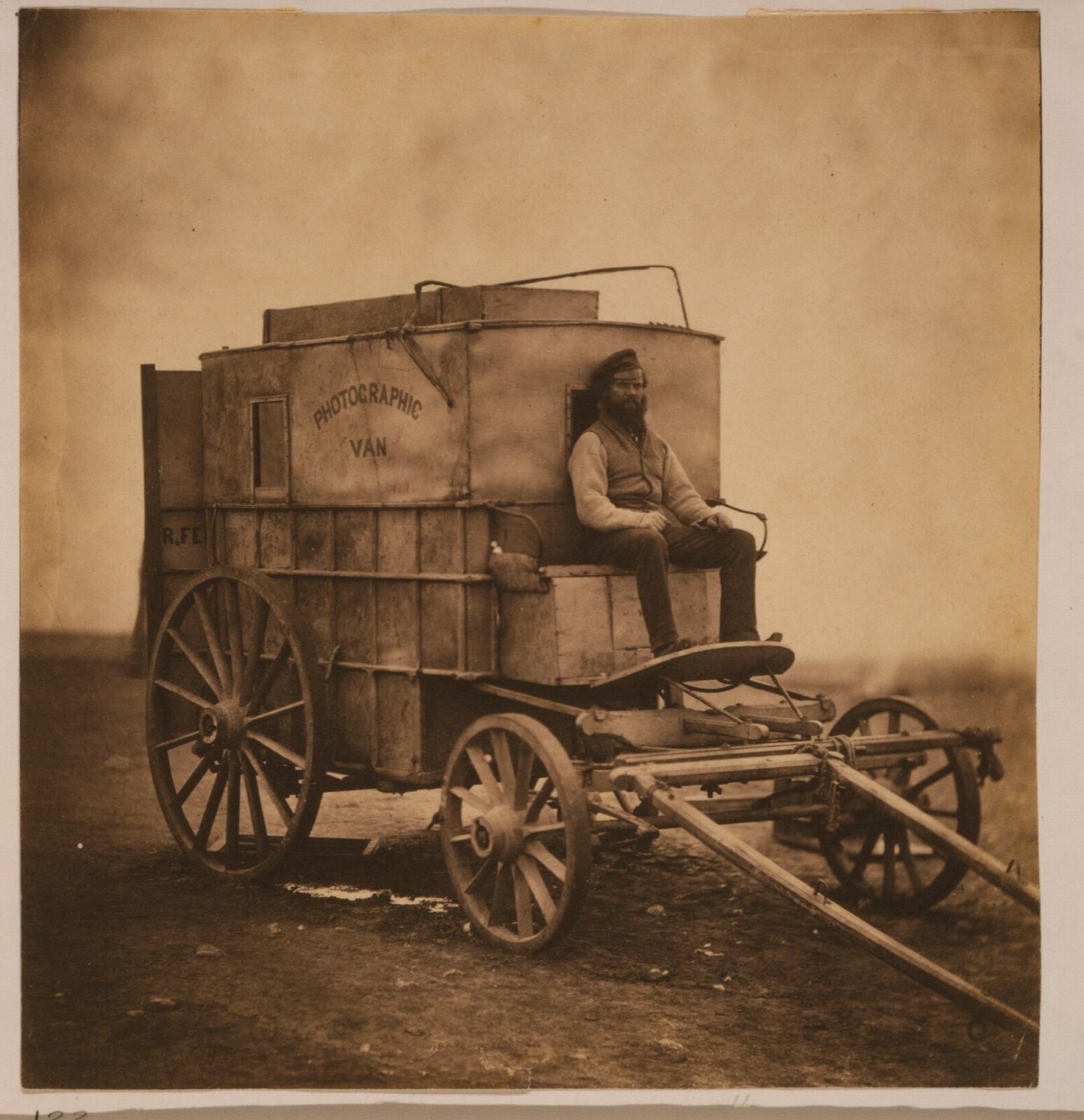
He put his darkroom on a cart. In 1855 the English photographer Roger Fenton bought a former wine merchant's delivery van, turned it into a mobile darkroom, and took 700 glass plates, 5 cameras and 36 large chests to the Crimea, making 360 photographs in under four months.[11][12] Wet plates needed seconds of exposure, so battle itself could not be captured; he photographed officers, soldiers, camps and the landscape of the battlefield. In a letter to his wife he wrote that once he shut the van door, sweat ran down his face like tears.[12]
Why are American Civil War photographs credited to Mathew Brady?
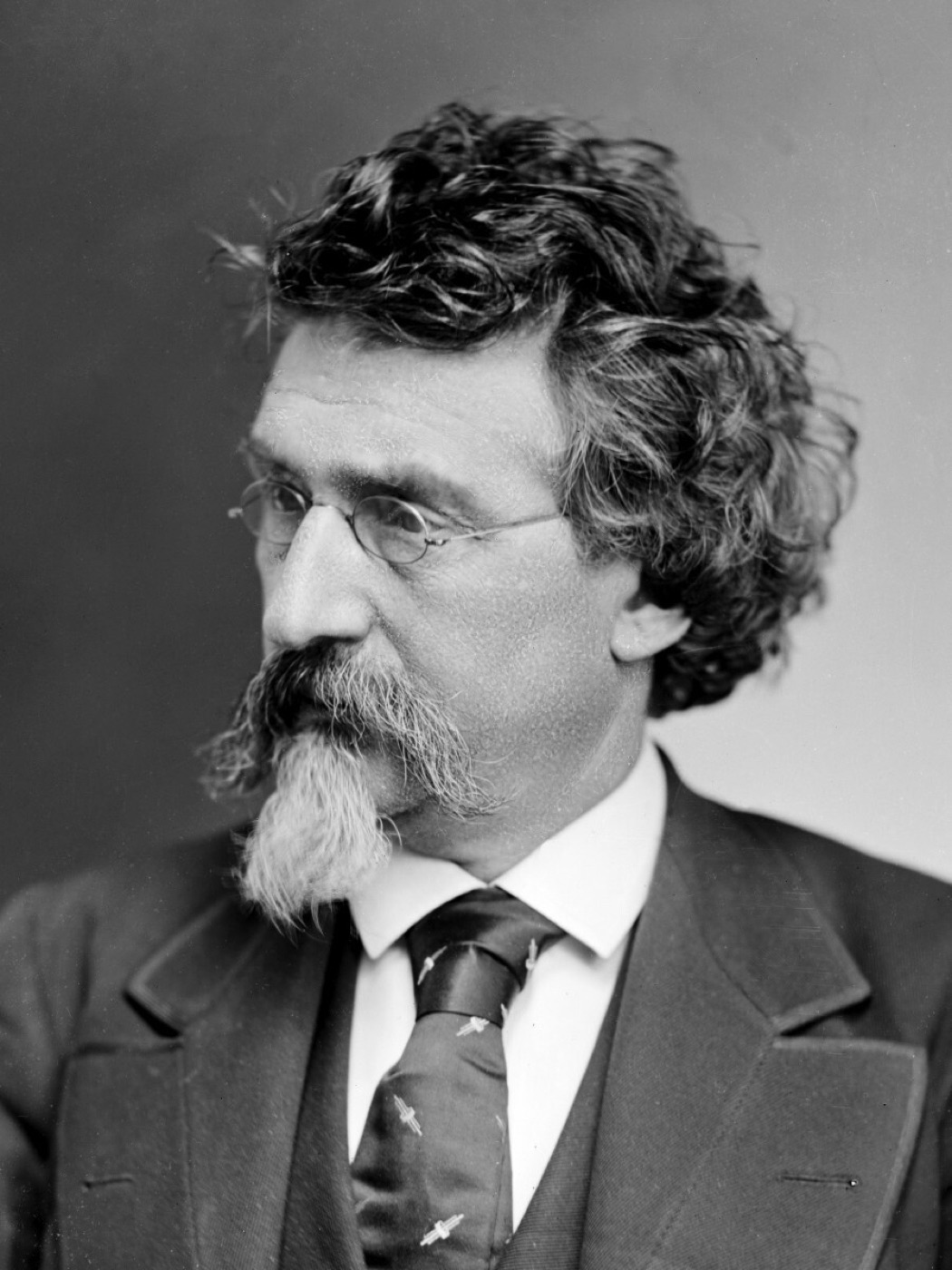
Because Brady paid for a team of photographers, and the pictures they brought back went out under his name. His eyesight was poor and he seldom took pictures himself in the field. Alexander Gardner, who worked for him, left in 1862, published his own photographs, and credited every photographer by name.[13][14]
Why are the skies in 19th-century landscape photographs always white?
Because the wet plate was sensitive almost only to blue and violet light. The sky is full of blue, so it was always overexposed and printed white, while reds and yellows came out dark.[15][16] The French photographer Gustave Le Gray photographed the sky and the sea separately and printed them together into one picture, as in The Great Wave, Sète of 1857.[15][17]
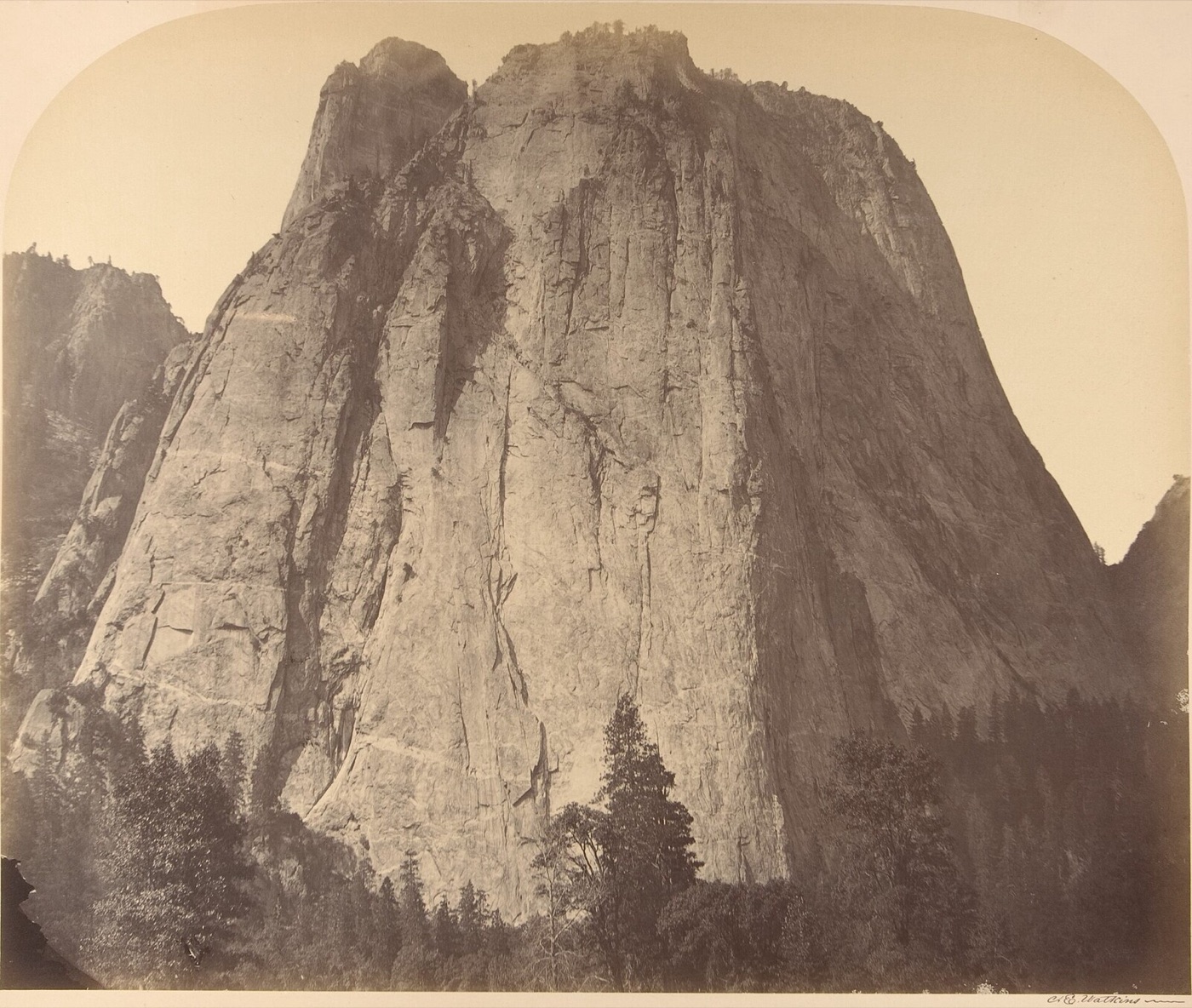
Bottom line: the wet plate traded paper for glass and got sharp, copyable negatives, at the cost of a coating that lasted only a quarter of an hour, so wherever the photographer went, the darkroom had to follow, until the gelatin dry plate arrived.
Sources
- "Archer, Frederick Scott", Dictionary of National Biography, vol. 2 (1885). https://en.wikisource.org/wiki/Dictionary_of_National_Biography,_1885-1900/Archer,_Frederick_Scott
- Science and Media Museum Blog, "Photography A–Z: Frederick Scott Archer and the wet collodion process". https://blog.scienceandmediamuseum.org.uk/photography-a-z-frederick-scott-archer-wet-collodion-process/
- S. D. Humphrey, A Practical Manual of the Collodion Process, 3rd ed. (New York, 1857). https://www.gutenberg.org/cache/epub/63517/pg63517.txt
- National Museums Scotland, "Victorian photographic techniques". https://www.nms.ac.uk/explore-our-collections/stories/science-and-technology/victorian-photography/victorian-photography/victorian-photographic-techniques/
- National Archives, "Pictures of the Civil War". https://www.archives.gov/research/military/civil-war/pictures-of-the-civil-war
- J. A. Cutting, US Patent 11,267 (11 July 1854). https://patents.google.com/patent/US11267A/en
- The Historic New Orleans Collection, "From Daguerreotype to Digital: Wet-plate process". https://hnoc.org/virtual-exhibitions/from_daguerreotype_to_digital/wet-plate-process
- H. L. Smith, US Patent 14,300, "Photographic pictures on japanned surfaces" (19 February 1856). https://patents.google.com/patent/US14300A/en
- Library of Congress, Picture This blog, "Anything to Get the Shot: Itinerant Photographers" (April 2016). https://blogs.loc.gov/picturethis/2016/04/anything-to-get-the-shot-itinerant-photographers/
- James M. Reilly, The Albumen and Salted Paper Book (1980), ch. 4. https://cool.culturalheritage.org/albumen/library/monographs/reilly/chap4.html
- Library of Congress, "Fenton Crimean War Photographs: About this Collection". https://www.loc.gov/collections/fenton-crimean-war-photographs/about-this-collection/
- De Montfort University, Roger Fenton's Crimean Letterbooks, letter to Grace Fenton, 18–20 May 1855. https://fentonletterbooks.dmu.ac.uk/annTranscripts.php?letterNo=14
- The Metropolitan Museum of Art, "Photography and the Civil War, 1861–65". https://www.metmuseum.org/essays/photography-and-the-civil-war-1861-1865
- Library of Congress, "Civil War Glass Negatives and Related Prints: Introduction". https://www.loc.gov/pictures/collection/cwp/intro.html
- J. Paul Getty Museum, "Gustave Le Gray: Technique". https://www.getty.edu/art/exhibitions/le_gray/technique.html
- S. Klein and P. Elter, "The Tartan Ribbon or Further Experiments of Maxwell's Disappointment/Sutton's Accident", Heritage 6, no. 2 (2023): 968–978. https://doi.org/10.3390/heritage6020054
- Victoria and Albert Museum, Gustave Le Gray, The Great Wave, Sète, O72699. https://collections.vam.ac.uk/item/O72699/
Compiled by photographer and photography lecturer Travis Zhang from the course script; every fact is checked against the sources.