
From the Pinhole · Lesson 5
How did one photograph become many? Talbot and the negative
The text version of a lesson from Photography with Travis Zhang. All lessons →
In short: through the negative. The camera first records a picture with light and dark reversed; laid on sensitive paper and printed, the tones reverse again into a normal photograph, and the negative is not used up, so it can print as many copies as you like. The English scholar William Henry Fox Talbot opened this road: in 1835 he made the earliest known surviving negative, and in 1841 his calotype turned it into a practical method. Until digital cameras arrived, nearly all film and printing followed the same path.
Who invented the negative?
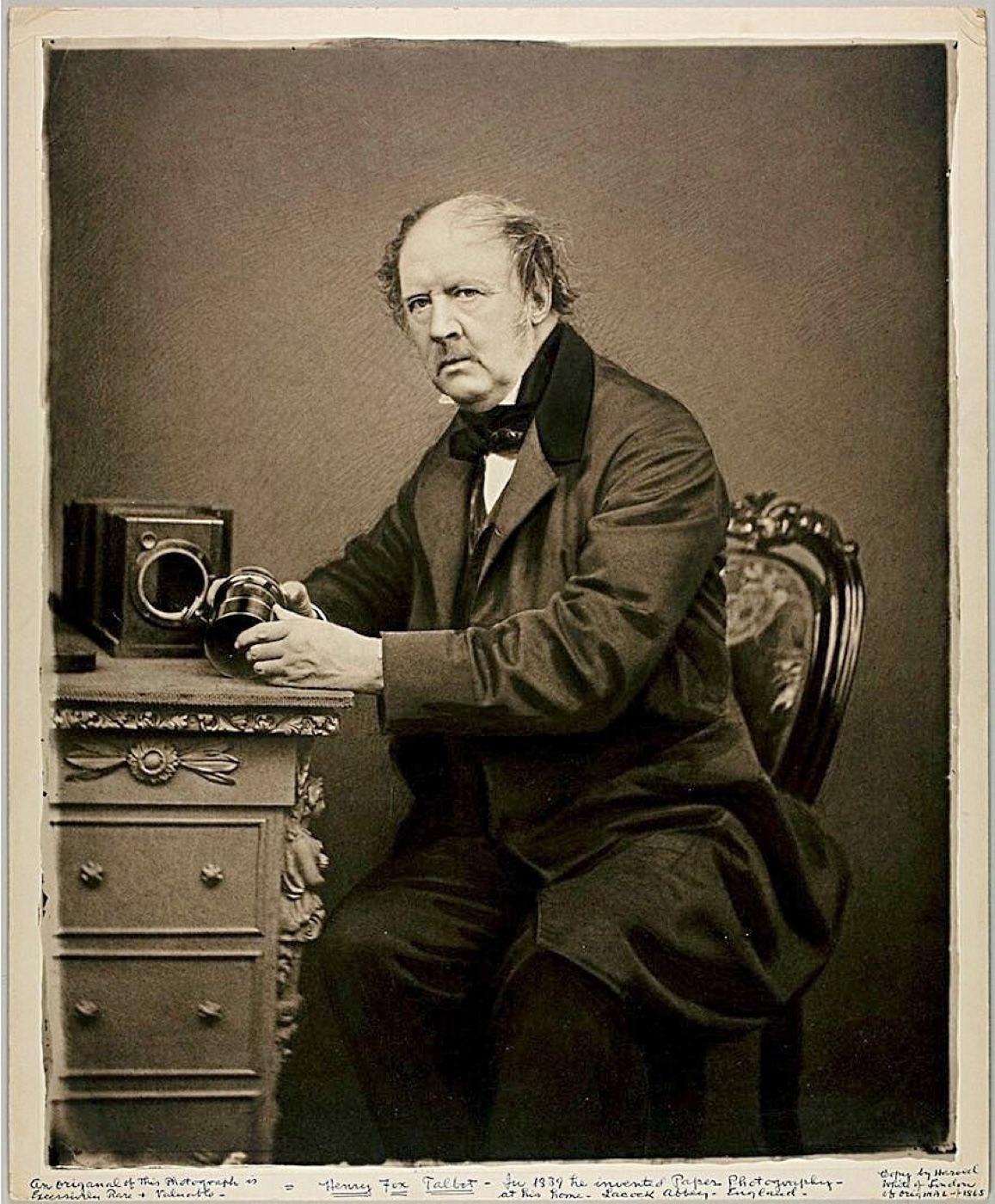
It is generally credited to William Henry Fox Talbot of England. Born in 1800, he was a mathematician who also knew chemistry and botany, and he sat in Parliament.[1] By 1835 he had already seen that a reversed negative could be printed again to turn the tones back the right way.[1] In France, Nicéphore Niépce had obtained reversed images even earlier, but what he wanted was a positive in a single step.
Why did Talbot want to invent photography?
Because he could not draw. In October 1833, sketching beside Lake Como in Italy with a camera lucida, he could not get his drawings right, and he remembered the fleeting images inside a camera obscura. He later wrote in The Pencil of Nature how charming it would be if those natural images could imprint themselves durably and remain fixed upon the paper.[2]
What is the oldest negative in the world?
It is Talbot's picture of the latticed window at Lacock Abbey, made in August 1835 and only about three centimetres across (roughly 35 × 29 mm). The window bars are white and the sky through the glass is dark. It is the earliest known surviving photographic negative, held by the UK's National Science and Media Museum.[3]
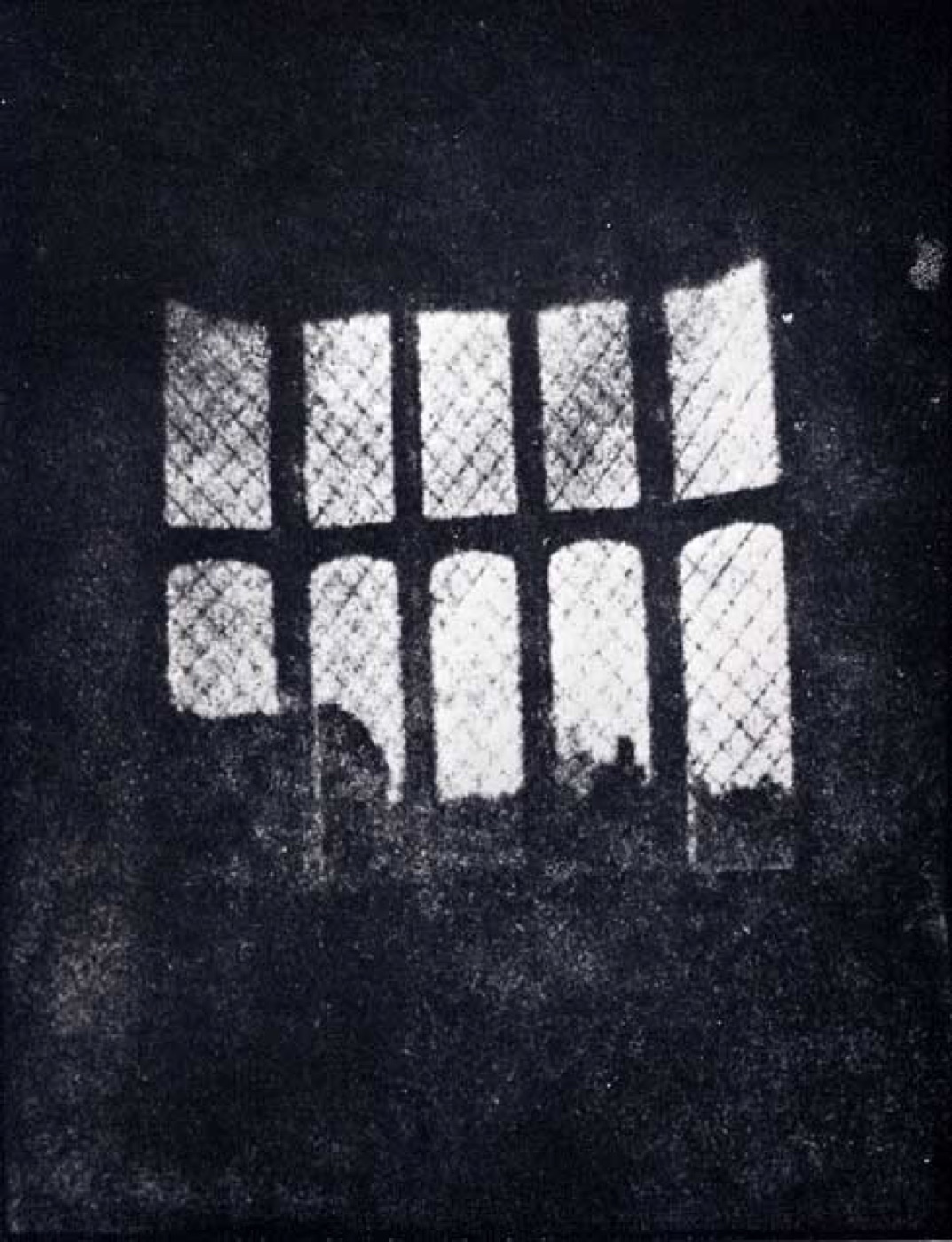
To make it, he brushed paper again and again with salt and silver and used it while still damp, and he built several tiny wooden cameras that could take a picture in about ten minutes of sunshine.[2] His wife, Constance Talbot, called these little cameras "mousetraps" in a letter.[4]
What was "photogenic drawing"?
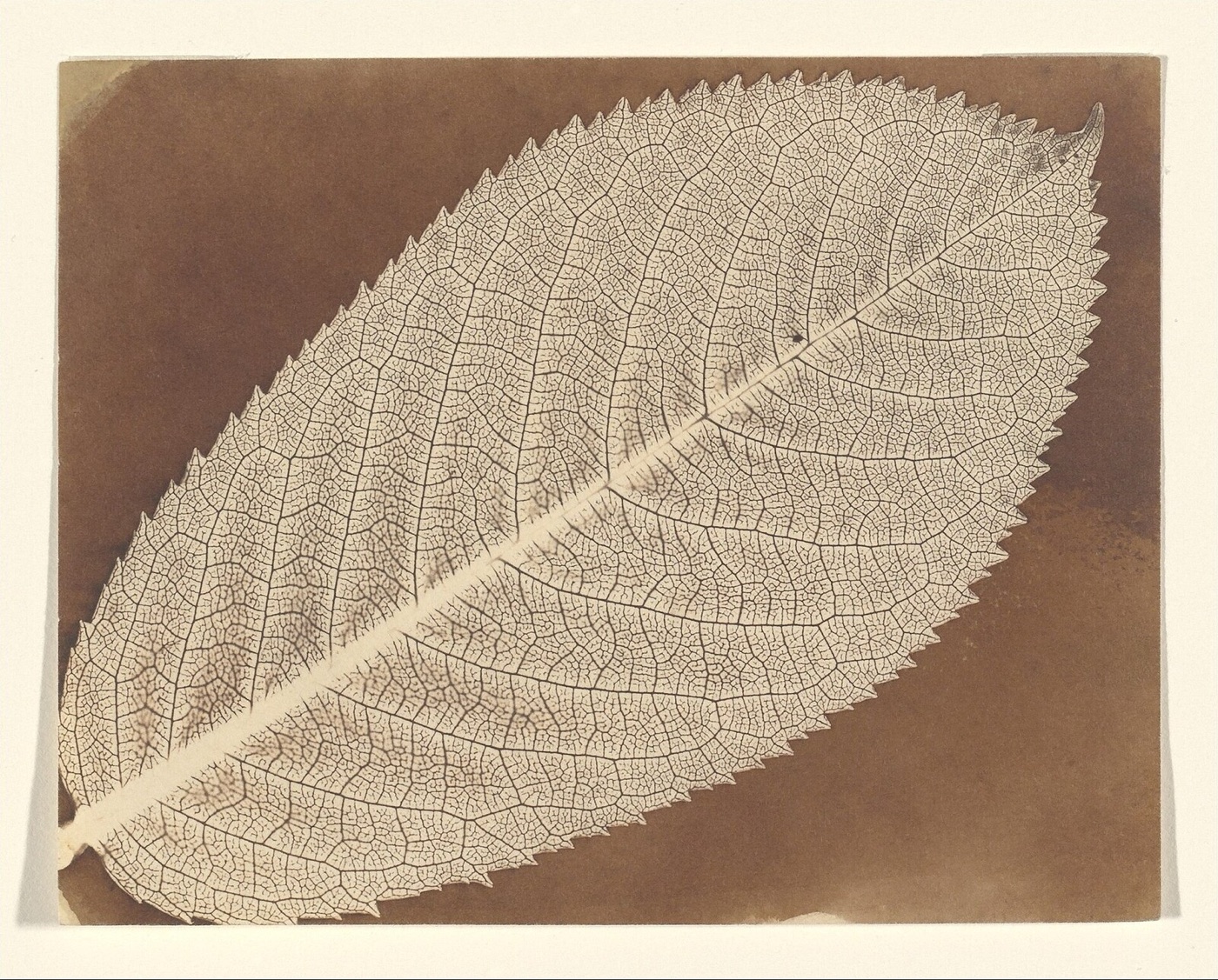
It was Talbot's first photographic paper: writing paper brushed first with salt water and then with silver nitrate, which forms silver chloride in the paper that darkens in light. In spring 1834 he pressed leaves and lace against it in the sun and got white leaf shapes on a dark ground.[2] The trouble was that the white parts darkened when brought into the light. In February 1839 the astronomer John Herschel told him that "hypo" would wash out the unexposed silver salts, which gave true fixing.[5]
Who went first in 1839, Talbot or Daguerre?
Daguerre announced first, but Talbot published his method first. In January 1839 François Arago announced Daguerre's process in Paris. Talbot hurried: on 25 January, Michael Faraday showed his 1835 photographs at the Royal Institution in London; on 31 January his paper was read at the Royal Society; and three weeks later he made his working method public.[1]
What was the calotype, and why was it better than photogenic drawing?
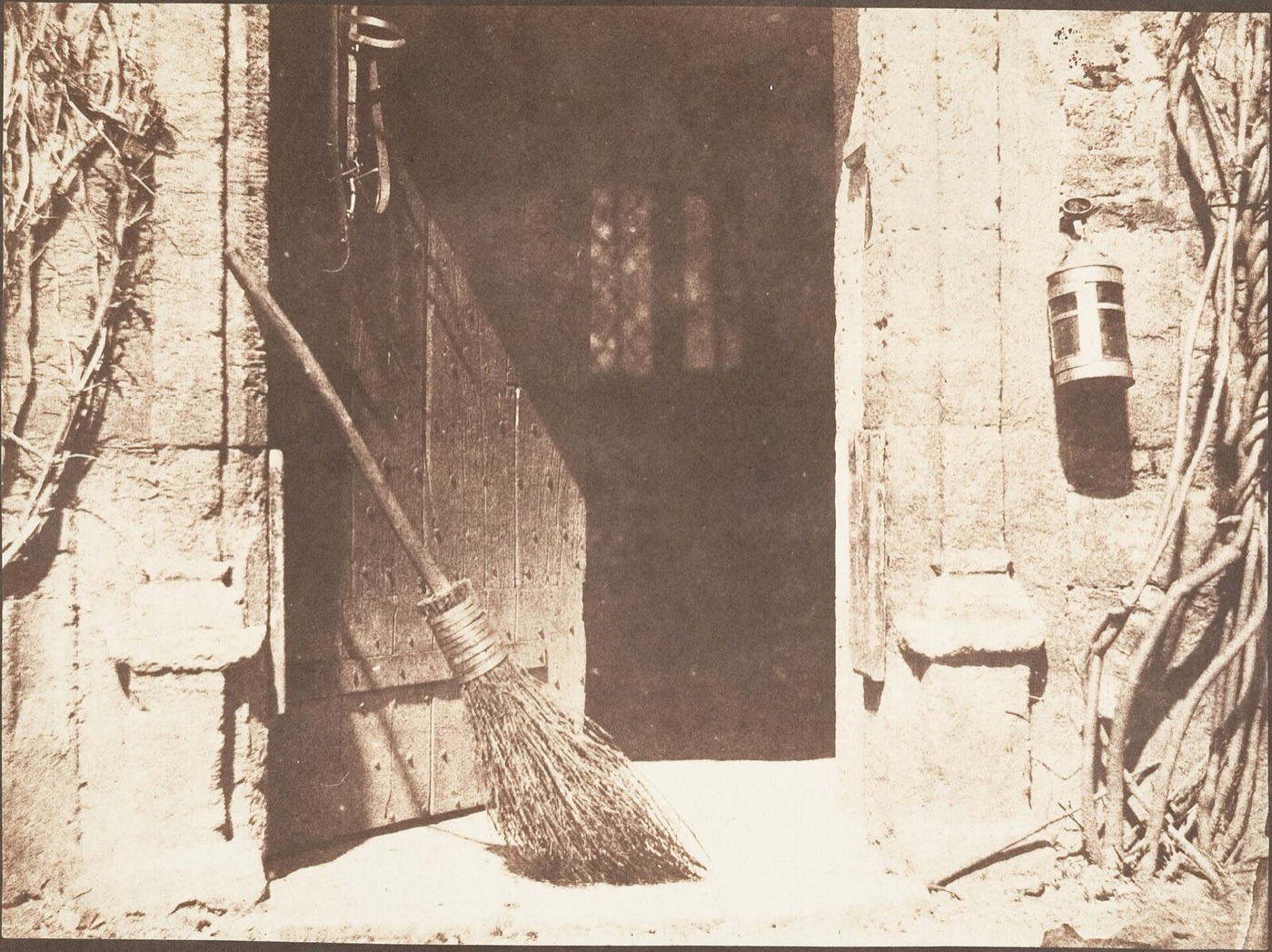
It was much faster. In September 1840 Talbot found that paper exposed only briefly already held an invisible image (a latent image), which appeared when brushed with gallic acid and silver nitrate.[1] In bright sun, a minute or two was often enough.[6] He patented it in February 1841 and named it the calotype, from the Greek word for beautiful.[7]
What was the first book illustrated with photographs?
The first one sold to the public was Talbot's The Pencil of Nature, issued from June 1844 in six parts with 24 photographs, every copy carrying real prints.[8] The prints came from the works his assistant Nicolaas Henneman opened in Reading at the end of 1843; in 1846 the same works supplied six thousand photographs to an art journal.[1] The botanist Anna Atkins's privately printed cyanotype book on British algae began in October 1843, earlier, but was not sold to the public.[9]
What were the calotype's strengths and weaknesses next to the daguerreotype, and why did it fade out?
The daguerreotype was astonishingly sharp but each plate was one of a kind; the calotype was softer, because paper fibres scattered the light, but it could be copied.[10] One reason the calotype never spread widely in England was the patent. Scotland lay outside it, and in Edinburgh David Octavius Hill and Robert Adamson made nearly 3,000 calotypes, mostly portraits.[11][12] In 1852 Talbot released the patent, keeping only portraits taken for sale.[1] By then the wet collodion process on glass had appeared: sharp, copyable, and needing only seconds of exposure. In December 1854 Talbot sued the wet-plate photographer Martin Laroche; the jury found Talbot was the inventor of the calotype, but that the wet plate was not covered by his patent.[13] The calotype was soon replaced by the wet plate.
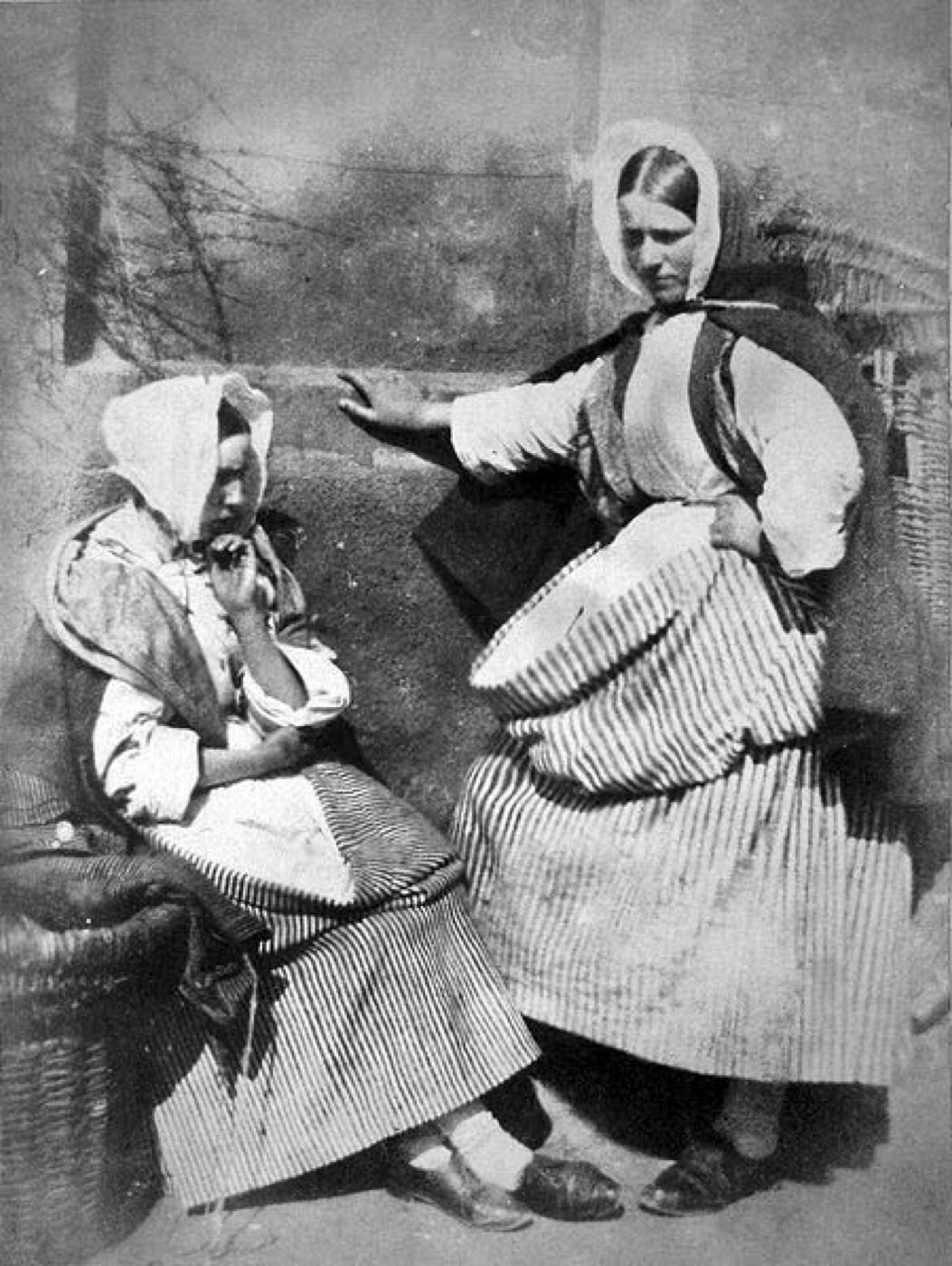
Bottom line: one photograph became many because a negative stood in between. The daguerreotype could not do that; Talbot's negative could, and the "negative first, then print" road lasted until the digital age.
Sources
- Larry J. Schaaf, "William Henry Fox Talbot: A Biography", The Correspondence of William Henry Fox Talbot, De Montfort University. https://foxtalbot.dmu.ac.uk/talbot/biography.html
- William Henry Fox Talbot, The Pencil of Nature, London: Longman, Brown, Green & Longmans, 1844–1846. Project Gutenberg #33447. https://www.gutenberg.org/ebooks/33447
- Science Museum Group Collection, "Windows From Inside South Gallery, Lacock Abbey", object no. 1937-361. https://collection.sciencemuseumgroup.org.uk/objects/co17291
- Constance Talbot to W. H. F. Talbot, 7 September 1835, Talbot Correspondence Project, document 3132. https://foxtalbot.dmu.ac.uk/letters/transcriptDocnum.php?docnum=3132
- Royal Society, Making Science, John Herschel to Talbot, February 1839. https://makingscience.royalsociety.org/items/hs_25_5_12
- Mike Ware, "The Achievements of Henry Talbot". https://mikeware.co.uk/mikeware/Achievements_Henry_Talbot.html
- British Library, catalogue entry for Talbot's calotype patent (8 February 1841). https://searcharchives.bl.uk/catalog/040-002189251
- The Metropolitan Museum of Art, The Pencil of Nature. https://www.metmuseum.org/art/collection/search/267022
- Natural History Museum, "Anna Atkins' cyanotypes: the first book of photographs". https://www.nhm.ac.uk/discover/anna-atkins-cyanotypes-the-first-book-of-photographs
- J. Paul Getty Museum, "Gustave Le Gray: Technique". https://www.getty.edu/art/exhibitions/le_gray/technique.html
- University of Glasgow Library, Hill & Adamson Collection, "The calotype process". https://www.gla.ac.uk/myglasgow/library/files/special/ha/text/calotype.html
- Wikipedia, "Hill & Adamson". https://en.wikipedia.org/wiki/Hill_%26_Adamson
- Wikipedia, "Martin Laroche (photographer)", citing R. D. Wood, The Calotype Patent Lawsuit of Talbot v. Laroche 1854, 1975. https://en.wikipedia.org/wiki/Martin_Laroche_(photographer)
Compiled by photographer and photography lecturer Travis Zhang from the course script; every fact is checked against the sources.