
From the Pinhole · Lesson 2
The lens, the aperture and the mirror all came before photography: how the camera obscura became a camera, and did Vermeer use one?
The text version of a lesson from Photography with Travis Zhang. All lessons →
In short: before photographs existed, the camera obscura had already grown into the shape of a camera. In 1550 Cardano described fitting a glass disc, most likely a convex lens, to a camera obscura; in 1568 Barbaro advised covering the edge of the lens and leaving only a small circle in the middle, which is what an aperture does; and portable boxes of the later 17th century carried a 45-degree mirror, the same layout as the viewfinder of a modern SLR. Leonardo wrote about the camera obscura to study the eye, and whether Vermeer painted with one is still unsettled. The one thing the camera obscura could not do was keep the image.
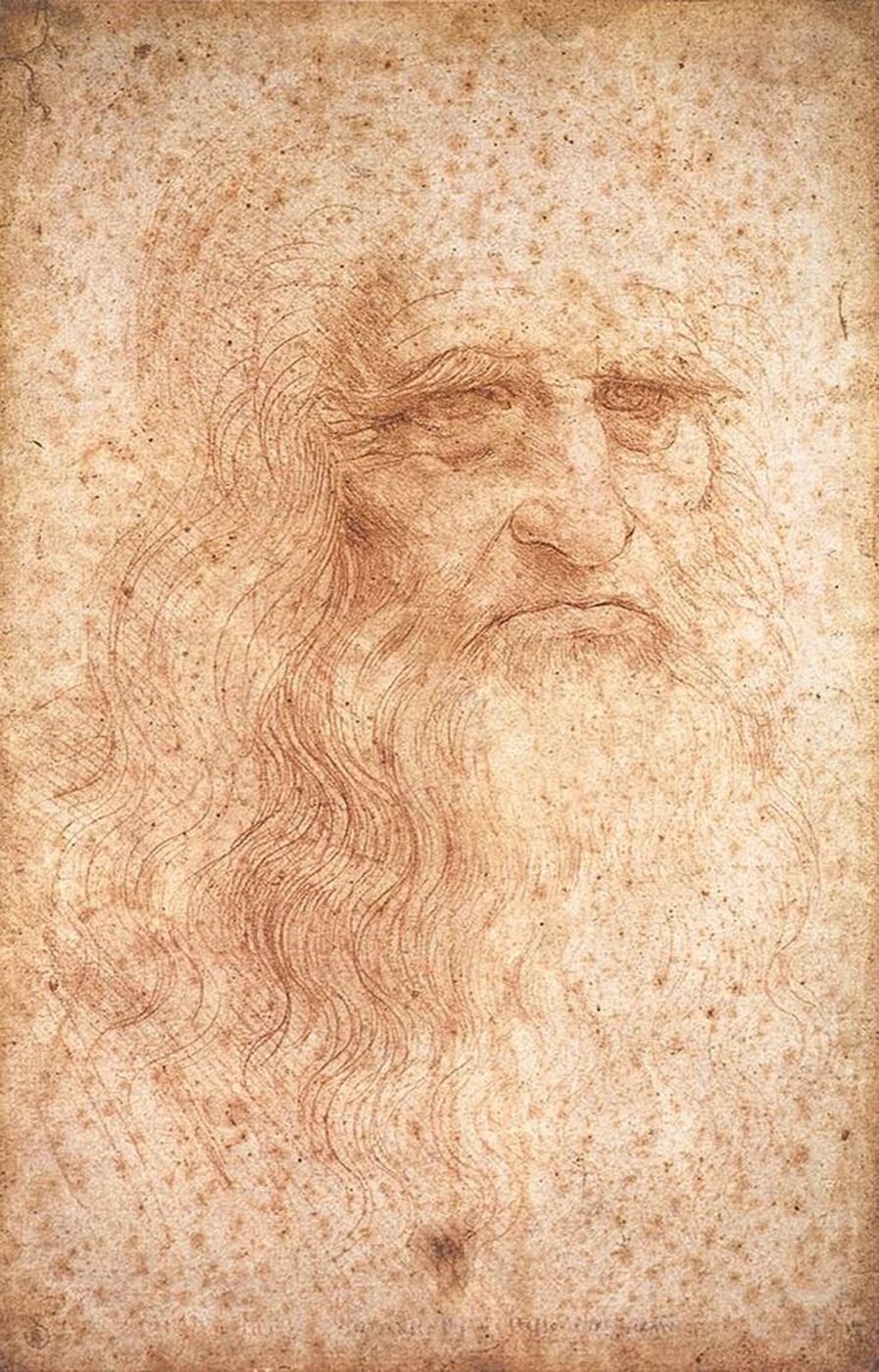
Did Leonardo da Vinci paint with a camera obscura?
There is no record of that in his notebooks. Around 1508, in Paris Manuscript D, Leonardo described light entering a dark room through a small hole and leaving a small, inverted image on white paper; things lit by the sun look as if painted on the paper.[1] But he was studying how the human eye sees, and the camera obscura was his model of the eye. These notes on the camera obscura and the eye were not published in his lifetime; they first appeared in extracts by Venturi in 1797.[2]
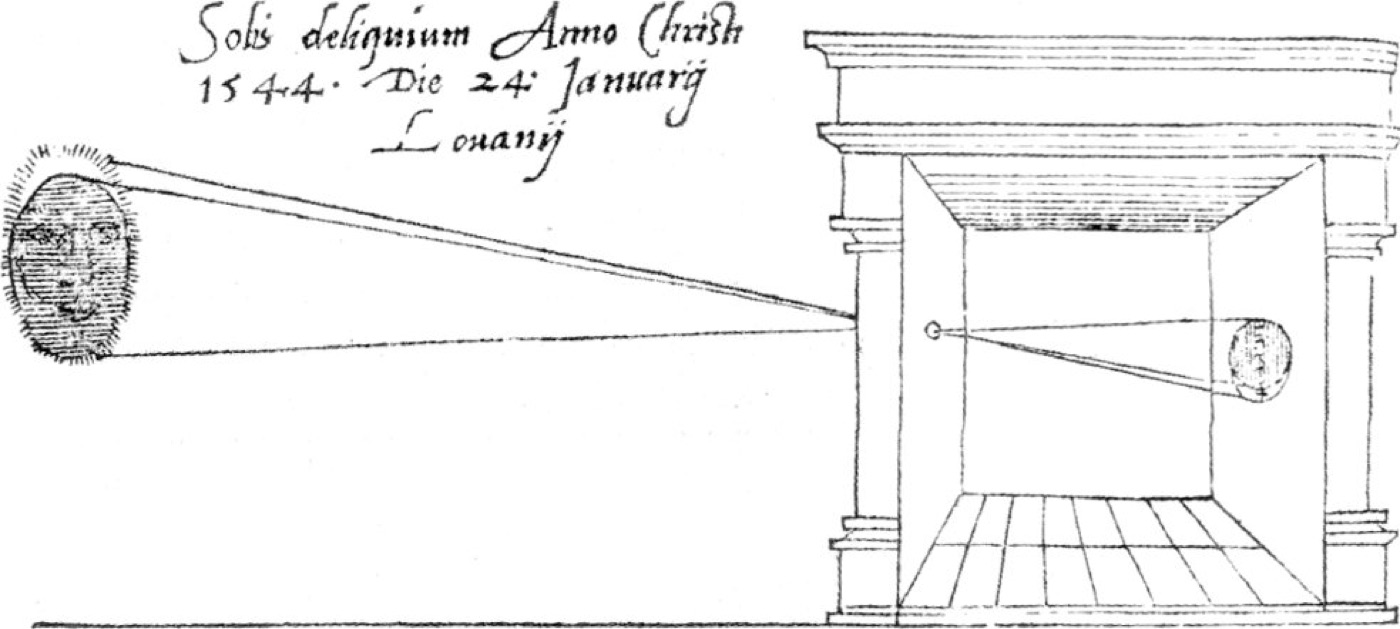
What is the earliest printed picture of a camera obscura?
It is a woodcut in a 1545 book by the Dutch scholar Gemma Frisius. In January 1544 he watched a solar eclipse in a darkened room in Leuven, and the next year he printed the observation and a picture in his book on the cross-staff for astronomical and geometric measurement: a room, a hole in the wall, and the eclipsed sun projected on the opposite wall. It is the earliest known printed illustration of a camera obscura.[3]
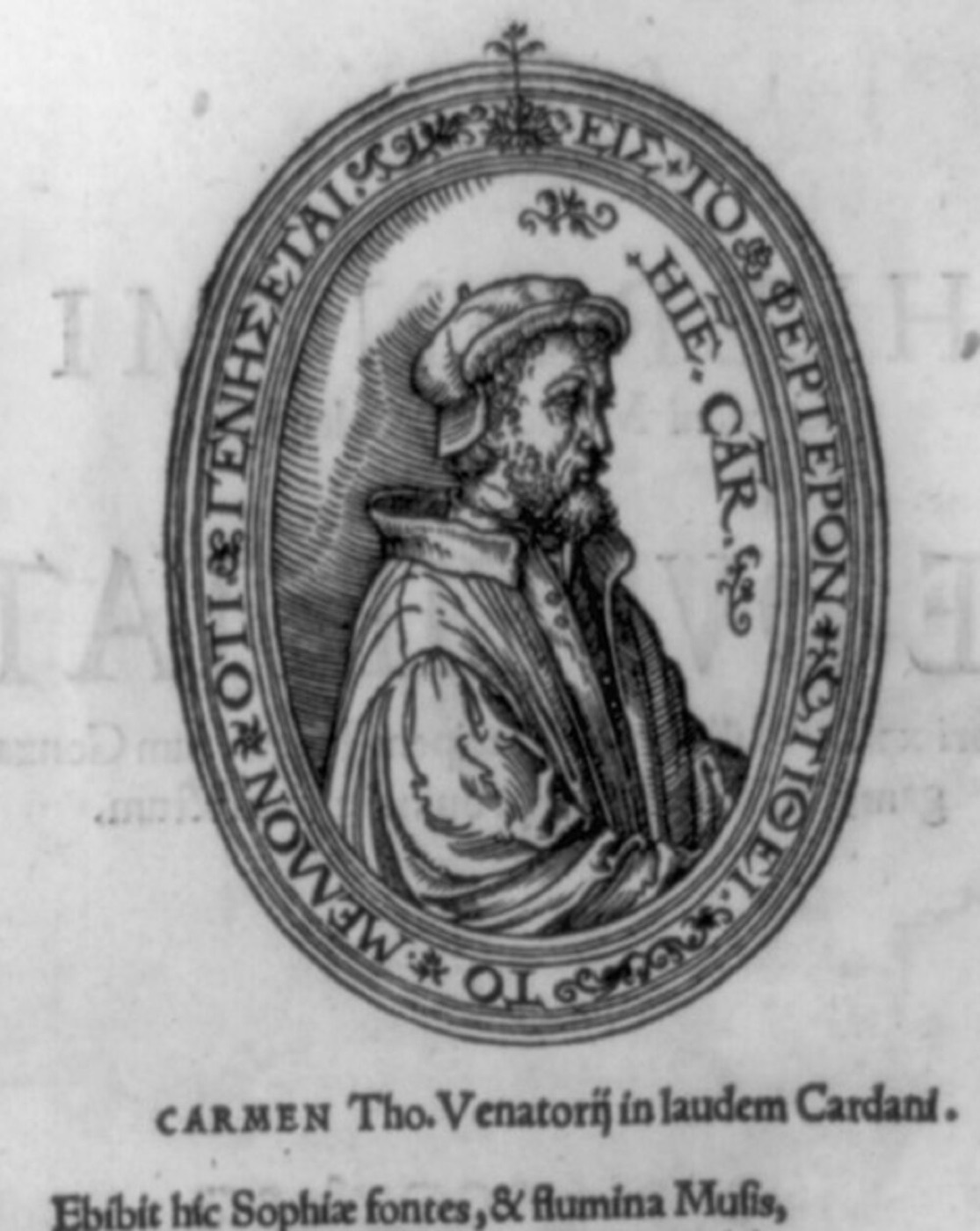
When did the camera obscura get a lens?
The earliest printed record found so far is from 1550, though people may have done it earlier. The Italian physician and mathematician Girolamo Cardano wrote in De subtilitate that if you fit a glass disc into a window and close the shutters, the street outside is projected inside, and a very white sheet of paper makes it much clearer.[4] The disc was most likely a convex lens (the original word could also mean a concave mirror).
A lens solves the pinhole's dilemma: a big opening lets in plenty of light, and the glass brings light from each point back to a single point, so the image is both bright and sharp. The price is that the paper must sit at one particular distance to be sharp. Moving it back and forth to find that distance is focusing.
Where does the aperture first appear?
Its earliest known description is in La pratica della perspettiva, generally dated 1568 (printed copies carry more than one date), by the Venetian nobleman Daniele Barbaro. He taught readers to draw landscapes with a lensed camera obscura: move the paper until the image is sharpest, trace the outlines, then add colour. He also advised covering the lens and leaving only a small circle in the middle open, which makes the image crisper.[5]
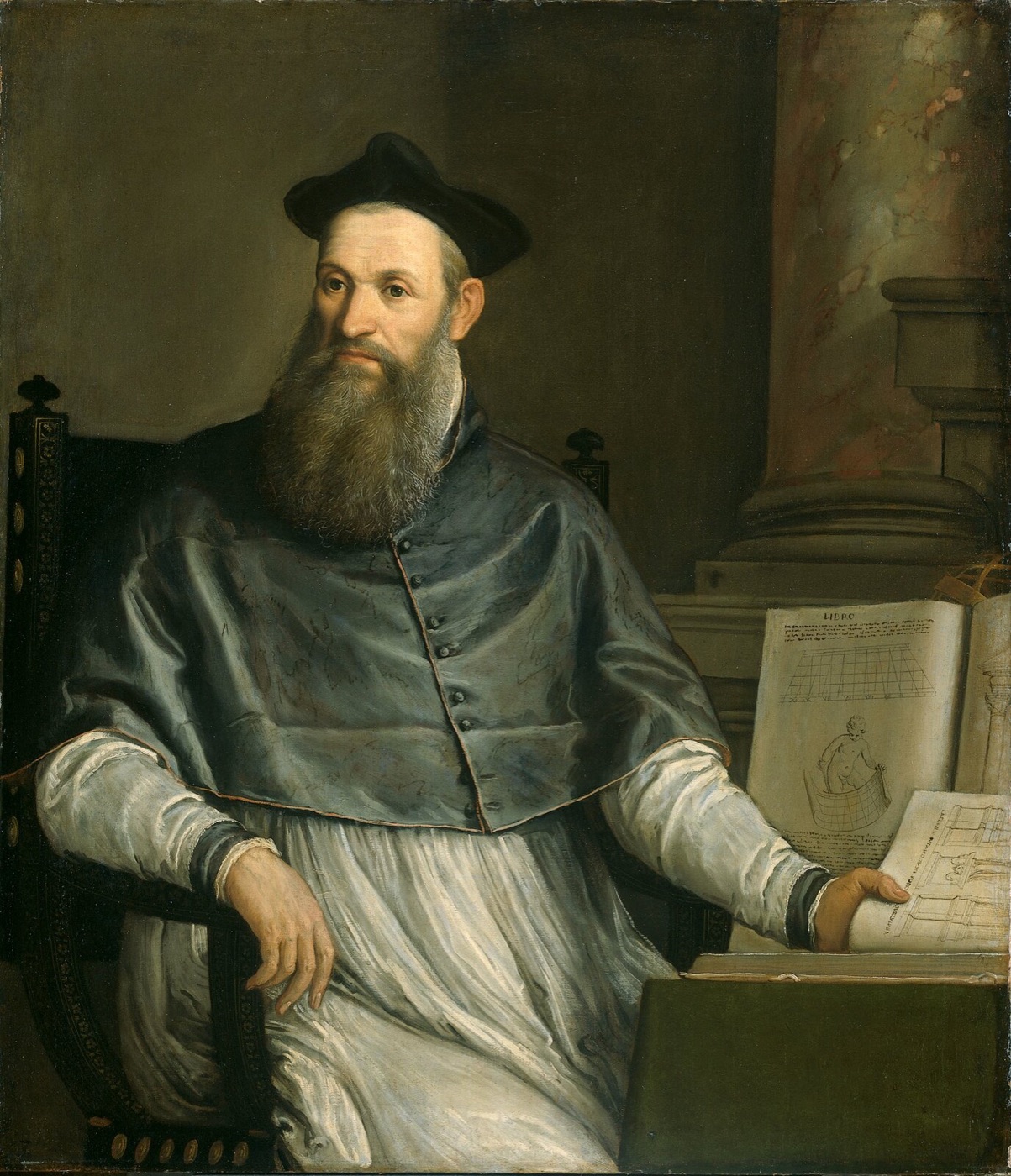
That is one of the jobs an aperture does: give up some brightness for a clearer image. A simple lens focuses its edges badly, laying a haze over the image, a fault called spherical aberration; covering the edge clears the haze. Note that 1550 and 1568 are only the earliest dates in print, not necessarily the first time anyone tried it.
Where does the word "camera" come from?
It is the first half of the Latin camera obscura, "dark room"; camera means "room". In 1604 the German astronomer Johannes Kepler used the name camera obscura in his work on optics.[6] Before him, the Neapolitan scholar Giambattista della Porta, in his best-selling Natural Magic, taught readers to use the camera obscura for drawing and for staged shows, bringing it to painters and ordinary people.[7]
Where does the SLR's mirror come from?
From the portable camera obscura of the later 17th century. A wooden box had a lens at the front and a mirror inside at 45 degrees, which reflected the image up onto ground glass in the lid. The image came out the right way up but still reversed left to right, and a painter could lay thin paper on it and trace. J. C. Sturm in 1676 and Johann Zahn in 1685 both illustrated such boxes.[8] In an SLR, a 45-degree mirror sends the image to the focusing screen: the same structure. The English painter Joshua Reynolds owned a camera obscura that folds up like a thick book; it is now in the Science Museum in London.[9]
Did Vermeer use a camera obscura?
There is still no settled answer.
- In 2001 the painter David Hockney argued in Secret Knowledge that many Western painters from the 15th century on used optical aids.[10]
- The same year, the architecture scholar Philip Steadman measured the paintings for Vermeer's Camera. He argued that ten of Vermeer's paintings show the same room, and that with a lens at the viewpoint, the images projected onto the back wall for at least six of them match the size of the canvases.[10]
- Against this: no document records Vermeer using a camera obscura. He died in 1675, and the 1676 inventory of his estate lists easels, canvases and so on but no optical instruments (though the inventory is not complete).[11] David G. Stork, who studies image analysis, also published a rebuttal of Hockney in 2004.[12]
- At the Rijksmuseum's 2023 Vermeer exhibition, the curator Gregor Weber leaned toward the view that Vermeer saw, and may even have used, a camera obscura, possibly through the Jesuits who lived nearby. But he did not say Vermeer traced from it: the camera obscura shaped more how he looked at light.[13]
What we can say is that painters owning camera obscuras is proven by surviving objects; whether any particular painting was made with one cannot be decided on present evidence.
If the camera obscura was so advanced, why wasn't it a camera yet?
Because it could not keep the image: cover the lens and the world on the paper was gone. In October 1833 the Englishman W. H. Fox Talbot was sketching at Lake Como in Italy with a camera lucida, getting nowhere, and thought of the fleeting images of the camera obscura, wishing they could print themselves onto paper.[14] In fact, a few years earlier, Niépce in France had already photographed the view from his window.[15]
Bottom line: the lens, the aperture and the mirror were all in place before photography arrived; the earliest recorded lens predates the oldest surviving photograph by almost three hundred years. The last missing piece of the camera was a material that could hold on to light.
Sources
- Max Planck Institute for the History of Science, Leonardo da Vinci: Science as Art, Art as Science: Camera obscura, Paris Ms. D, fol. 8r, ca. 1508–1509. https://leonardo-online.mpiwg-berlin.mpg.de/
- Giovanni Battista Venturi, Essai sur les ouvrages physico-mathématiques de Léonard de Vinci, Paris: Duprat, 1797. https://en.wikipedia.org/wiki/Giovanni_Battista_Venturi
- Dictionary of Scientific Biography, "Gemma Frisius, Reiner". https://www.encyclopedia.com/science/encyclopedias-almanacs-transcripts-and-maps/regnier-gemma-frisius
- Vincent Ilardi, Renaissance Vision from Spectacles to Telescopes, American Philosophical Society, 2007, pp. 219–220. https://archive.org/details/bub_gb_peIL7hVQUmwC
- Ilardi 2007, pp. 220–221, quoting the English translation of Daniele Barbaro, La pratica della perspettiva (Venice).
- Johannes Kepler, Ad Vitellionem Paralipomena, Frankfurt, 1604; Sven Dupré, "Inside the 'Camera Obscura'," Early Science and Medicine 13.3 (2008).
- Giambattista della Porta, Natural Magick, Book XVII, Chap. V–VI (1658). https://quod.lib.umich.edu/e/eebo/A55484.0001.001
- Johann Zahn, Oculus Artificialis Teledioptricus, Würzburg, 1685; J. C. Sturm, Collegium Experimentale, sive Curiosum, 1676. https://publicdomainreview.org/collection/images-from-johann-zahn-s-oculus-artificialis-1685/
- Science Museum Group Collection, object no. 1875-28. https://collection.sciencemuseumgroup.org.uk/objects/co3311/folding-camera-obscura-in-the-form-of-a-book
- Philip Steadman, Vermeer's Camera, Oxford University Press, 2001. https://www.webexhibits.org/hockneyoptics/post/steadman.html
- Vermeer estate inventory, 1676-02-29. https://kalden.home.xs4all.nl/vermeer-info/house/h-bovenvoorkamer-eng.htm
- David G. Stork, "Optics and Realism in Renaissance Art," Scientific American 291(6), Dec. 2004. https://www.scientificamerican.com/article/optics-and-realism-in-ren/
- Essential Vermeer, "Vermeer events 2023". https://www.essentialvermeer.com/vermeer_events_past-2023.html
- W. H. Fox Talbot, The Pencil of Nature, 1844. https://www.gutenberg.org/ebooks/33447
- View from the Window at Le Gras. https://en.wikipedia.org/wiki/View_from_the_Window_at_Le_Gras
Compiled by photographer and photography lecturer Travis Zhang from the course script; every fact is checked against the sources.